New framework optimizes energy storage for worst-case grid outages

A research team from Spain and the United Arab Emirates (UAE) has developed a novel optimization framework to determine where energy storage systems (ESS) should be installed and how large they should be to improve the resilience of active distribution networks.
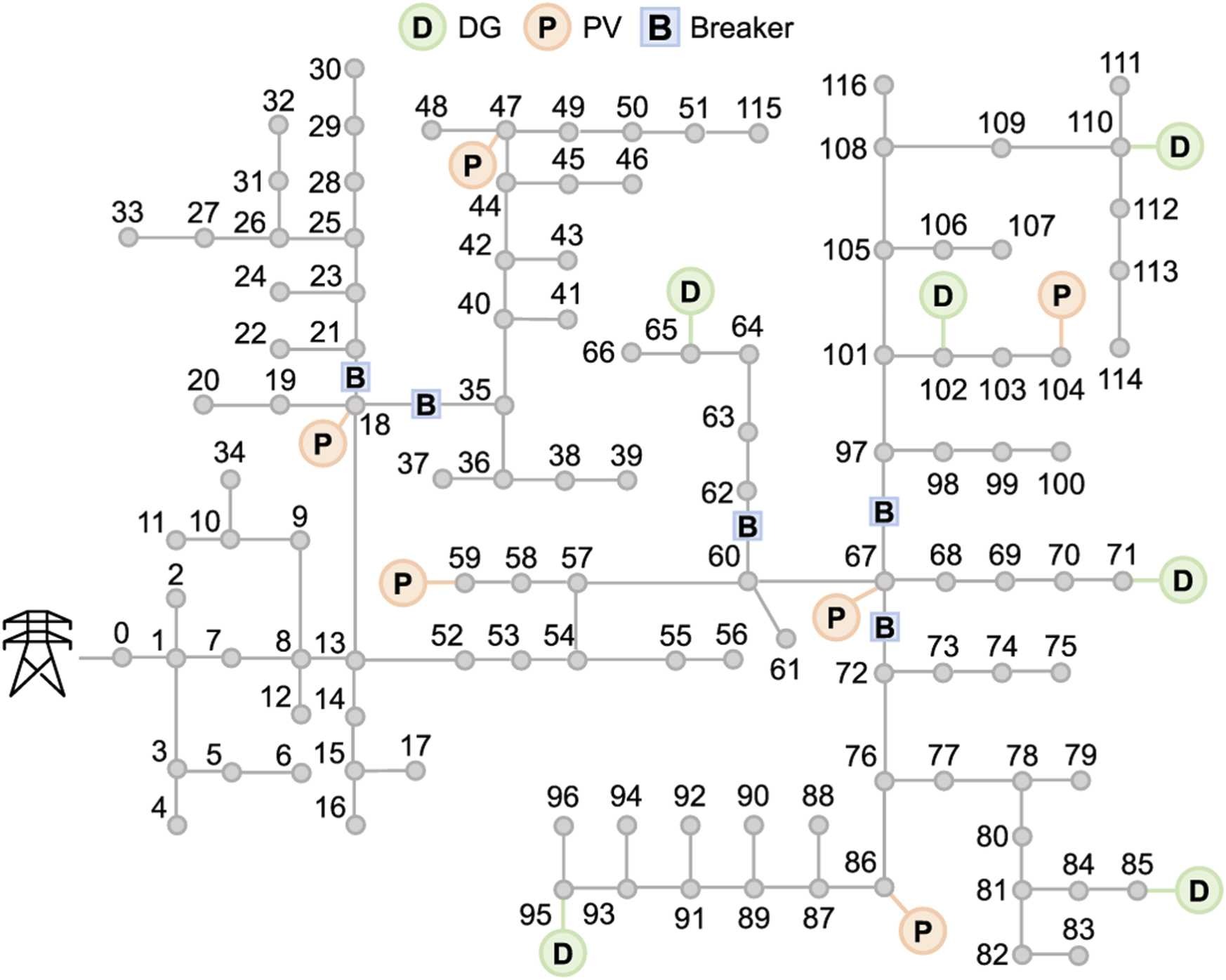
The framework combines Benders decomposition with a column-and-constraint generation algorithm and was tested on 13-, 33-, and 116-bus networks.
“The main novelty of our research is that we developed a resilience-oriented planning framework capable of identifying the most critical outage scenarios during the optimization process, rather than relying on predefined contingency scenarios,” researcher Marcos Tostado-Véliz told ESS News. “In other words, the algorithm automatically discovers the worst combinations of component failures and uncertainty realizations while simultaneously determining the optimal location and size of energy storage systems.”
Tostado-Véliz said this worst-case approach provides a more realistic and robust basis for investment decisions in distribution networks, which are increasingly exposed to extreme events associated with climate change.
“We are currently extending this research in several directions; one of them is incorporating the temporal evolution of extreme events and post-disaster restoration processes, moving beyond the static planning framework presented in this paper,” he added.
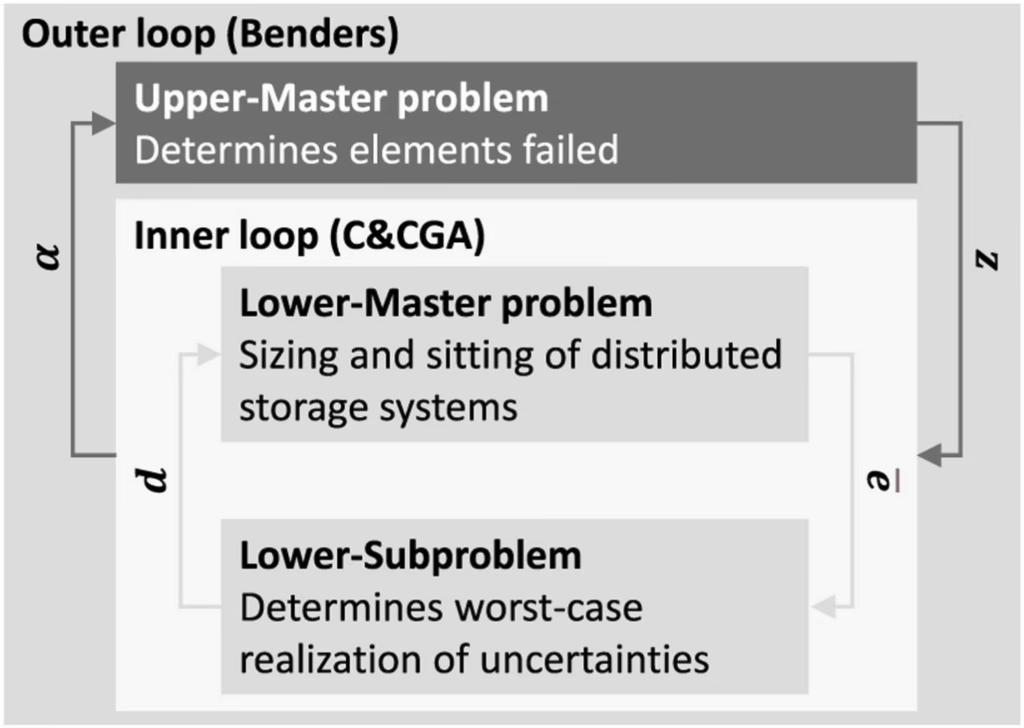
The novel framework uses Benders decomposition to identify the worst-case combination of line and distributed-generation outages. In the outer loop, an auxiliary problem calculates the sensitivity of energy not served (ENS) to changes in component availability, and Benders decomposition transfers this information to an upper master problem, which generates increasingly severe outage configurations while eliminating infeasible or previously examined solutions.
Within each outage configuration, a column-and-constraint generation algorithm addresses uncertainty in electricity demand and renewable generation. Its lower subproblem identifies the uncertainty realization that maximizes ENS, while its lower master problem uses the generated scenarios to determine the cost-optimal locations and capacities of energy storage within the available investment budget. The two processes continue iteratively until the model identifies the most severe outage and uncertainty combination that the optimized storage portfolio can withstand with zero ENS.
The researchers tested and validated the framework on 13-, 33-, and 116-bus radial distribution networks containing circuit breakers, dispatchable distributed generators (DGs), and PV systems, all of which could become unavailable during a contingency. The baseline simulations considered lithium-ion batteries costing €486 ($560)/kWh, with a two-hour energy-to-power ratio, 95% efficiency, and ±20% uncertainty in demand and PV generation. The model was implemented in MATLAB and solved using Gurobi under different storage investment budgets. Additional analyses examined alternative battery technologies and uncertainty ranges and compared the framework with stochastic approaches.
“One of the most interesting findings is that strategic storage deployment can eliminate energy not served even under the worst-case outage scenarios identified by the optimization model,” Tostado-Véliz said. “Another remarkable result is that increasing the storage investment does not simply improve the performance against the same disturbances; instead, it enables the network to withstand increasingly severe contingencies while still maintaining uninterrupted supply. We also found that the proposed methodology remains computationally efficient, solving networks with up to 116 buses in less than 100 seconds, which demonstrates its practical scalability for real planning studies.”
Tostado-Véliz said his team is also working to incorporate the temporal evolution of extreme events, along with multiple flexibility resources such as electric vehicles, demand response, and hydrogen energy storage.
“We are also interested in applying these optimization techniques to active distribution networks with high penetrations of renewable generation and to emerging energy communities, where resilience is becoming an increasingly important objective,” he said.
The researchers presented the novel framework in “Resilience-oriented siting and sizing of storage systems in active distribution networks: A worst-case-driven approach,” published in Sustainable Energy, Grids and Networks. The research was conducted by scientists from Spain’s University of Jaén and the UAE’s University of Sharjah.
More about
Written by
Comments



Popular Posts