Brazil’s ONS outlines faster grid access route for 2027 battery auction winners

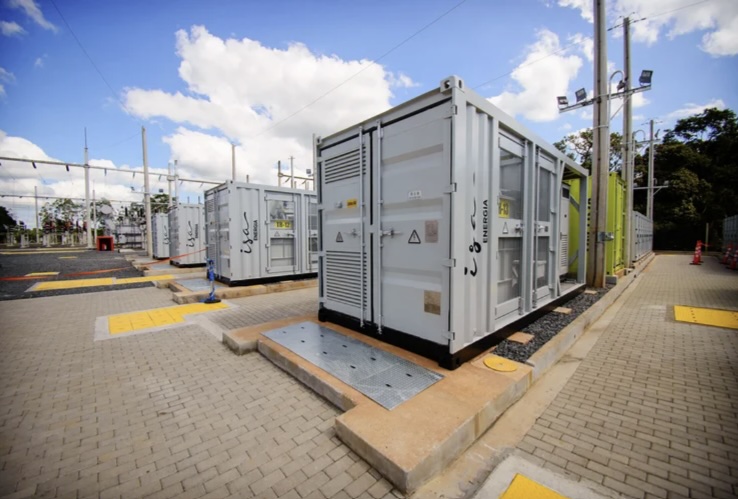
Brazil’s National Electric System Operator (ONS) has published a 14-question FAQ document addressing technical, operational and regulatory issues related to energy storage systems, with a focus on batteries and their participation in the Capacity Reserve Auction (LRCAP).
The FAQ covers topics ranging from the sharing of grid connection facilities between storage systems and existing power plants to qualification requirements, transmission network-use contracts, metering and project operation.
Among its main clarifications, the ONS says projects selected in the auction that need to connect to the Basic Grid or increase their contracted transmission system usage must participate in the access seasons under the National Transmission System Access Policy (PNAST).
From 2027, however, the access seasons will include a specific route for projects selected in electricity and capacity reserve auctions. The measure is intended to accelerate the grid access process.
The change is related to Normative Ordinance No. 129/2026 from Brazil’s Ministry of Mines and Energy (MME). Under the ordinance, projects selected in auctions that use transmission capacity as a selection criterion must be included in calculations of the remaining capacity offered in the access seasons. These projects will therefore not need to take part in every stage required of other projects, such as competitive processes.
The ONS stresses, however, that qualification for the LRCAP does not replace the grid access process or the need to contract transmission system use. Developers must complete the applicable steps, including providing the required guarantees, obtaining a Preliminary Access Diagnosis (DPA), signing the network-use contract and subsequently submitting the electrical studies needed for the issuance of an Access Opinion.
Power limits
The document also clarifies the conditions for connecting storage systems associated with existing power plants. Under current regulations, only standalone energy storage systems (SAE Autônomo) can form an association with generating plants. In this model, sharing connection facilities is mandatory for projects that form part of the association.
Standalone storage systems can also share connection facilities with generating plants without forming an association. Co-located storage systems (SAE Colocalizado), by definition, share connection facilities with a generating plant.
Another issue concerns whether the combined nominal power of equipment can exceed the physical capacity of the connection facility. According to the ONS, supervisory, control and protection systems can ensure that actual power injection does not exceed the available physical limit.
However, the use of power limiters alone does not remove the need to demonstrate connection feasibility. The applicable criteria for grid capacity studies and network-use contracts remain in force.
Regarding the contracted transmission system usage amount (Montante de Uso do Sistema de Transmissão, or MUST), the FAQ states that the generation-mode amount contracted by a generating plant with co-located storage can be increased by the storage system’s maximum installed discharge power, subject to applicable regulations.
The developer is responsible for assessing the impact of power injection on the physical capacity of equipment at its exclusive-use transmission facilities.
For the joint operation of solar plants and storage systems, the ONS also clarifies the possibility of using the temporary overload capacity of step-up transformers.
There is no procedural restriction on using additional capacity specified by the manufacturer, provided applicable requirements are met. However, operation with 20% additional power for up to four hours is an exceptional condition intended for specific emergency situations and cannot be treated as a normal operating mode.
Developers must assess whether equipment needs to be resized, as well as the effects on its service life, thermal limits, protection system coordination and simultaneous dispatch.
The FAQ also confirms that storage systems can be dispatched simultaneously with the associated power plant, provided physical facility limits, contracted MUST, Access Opinion requirements and ONS operating instructions are respected. The operator must ensure that no overloads occur under normal operating conditions.
State-of-charge management
Another key topic is grid-forming functionality, which refers to the ability of inverters to establish and maintain voltage and frequency references for the electricity system.
According to the ONS, the energy needed to maintain this functionality must be included in the project’s energy balance and operating strategy. The operator must preserve the state of charge required to meet performance requirements and follow the ONS’s operating instructions and criteria.
The system’s design and operation must simultaneously meet dynamic performance requirements and the contractual obligation to deliver power. Managing the state of charge, electrical losses and auxiliary consumption is the developer’s responsibility.
The document also states that the commercial and metering treatment of energy associated with grid-forming must comply with the auction rules, electricity trading rules and applicable technical documents.
To demonstrate the technical feasibility of storage systems, developers must submit the access studies required under the Network Procedures. The analyses must consider the impact of equipment integration on power flows, power factor compliance, reactive power injection at the connection point, load rejection, voltage stability, short-circuit levels, dynamic performance and power quality.
The ONS may request additional studies depending on equipment characteristics and the impacts identified in connection to the transmission system.
There is, however, a specific exemption from the power flow study related to transmission capacity in cases involving storage systems selected in auctions based on transmission capacity and demand criteria, as well as projects whose system feasibility was granted in an access season for connection to the Basic Grid.
The FAQ also addresses storage system metering and losses. The metering architecture must allow charging and discharging flows to be identified and comply with the requirements of the Settlement Metering System (SMF).
Electrical losses, storage cycle efficiency and auxiliary consumption must be considered in both project sizing and operation. Accounting and commercial treatment must follow regulations from Brazil’s National Electric Energy Agency (Aneel), the trading rules of the Chamber of Electric Energy Commercialization (CCEE) and the auction provisions.
Technical qualification
On registration and technical qualification of storage systems for the LRCAP, the ONS advises projects to comply with the combined requirements of the auction ordinance, the tender rules and their annexes, the joint ONS/EPE technical note and the current Network Procedures.
The technical requirements set out in these documents will be assessed in subsequent stages, during access requests, pre-operational studies and/or project commissioning. Registration and technical qualification for participation in the auction, meanwhile, are the responsibility of the Energy Research Office (EPE).
The ONS also clarifies that limitations in facilities under the developer’s responsibility do not exempt it from potential penalties for unavailability or failure to deliver contracted power. Developers are responsible for appropriately sizing their facilities to meet the commitments made in the auction.
Finally, the FAQ advises parties seeking substations that could be candidates for expansion to connect storage systems to consult official ONS documents, including the Medium-Term Electric Operation Plan for the National Interconnected System (PAR/PEL) and the Grid Capacity Maps.
The indication of remaining capacity at a substation does not, however, guarantee access. Developers remain subject to all stages of the current access and contracting process.
The ONS said that the FAQ is for informational purposes only and does not replace legislation, regulations, Network Procedures, tender rules, contracts or formal statements applicable to individual projects. The document also acknowledges that several operational, procedural and contractual issues still require further detail through supplementary regulations, auction rules and amendments to the Network Procedures.
From pv magazine Brasil
More about
Written by
Comments




Popular Posts