China restores 2% lithium-ion battery tax after 11-year exemption

China has begun collecting consumption tax on lithium-ion batteries from Sept. 1, ending an exemption that had been in place for more than a decade and adding a new cost component for domestic battery energy storage products.
The measure is a legacy tax returning to the industry. China added batteries to its consumption tax regime in February 2015 with a statutory rate of 4%, but exempted lithium-ion batteries, lithium primary batteries, nickel-metal hydride batteries, fuel cells, solar cells and vanadium redox flow batteries as part of policies supporting emerging clean-energy industries.
Under a policy issued jointly by the Ministry of Finance, General Administration of Customs and State Taxation Administration in July, lithium-ion batteries, lithium primary batteries, nickel-metal hydride batteries, mercury-free primary batteries and vanadium flow batteries are now taxed at 2% from Sept. 1, 2026, before returning to the statutory 4% rate from Sept. 1, 2027.
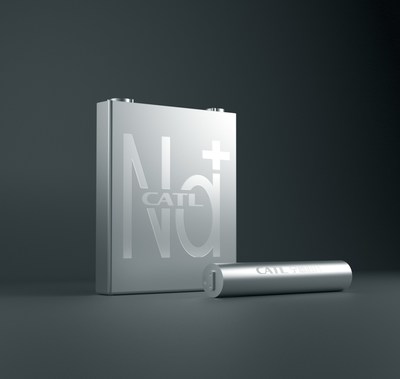
The policy retains temporary exemptions through the end of 2028 for sodium-ion batteries, solid-state batteries and fuel cells. Semi-solid batteries do not qualify as solid-state batteries for the exemption, according to clarification issued by the State Taxation Administration on Aug. 27. Tax-exempt products must also comply with applicable national standards and obtain qualifying test reports.
For the stationary storage industry, the tax authority has clarified an important boundary.
Lithium-ion cells and battery packs are taxable, and battery clusters assembled from cells are also regarded as battery products. However, a complete battery energy storage system incorporating electrical equipment, thermal management, fire protection and control systems is classified as complete power equipment and is not subject to another consumption tax. Taxes already paid on battery inputs can also be deducted when those products are used to manufacture another taxable battery product.
The result is therefore not a straightforward 2% increase in the price of an entire BESS.
Shanghai Metals Market (SMM), a research platform, estimated before the final tax clarification that a 2% rate would add around CNY 0.00648/Wh (~USD 0.9643/kWh) at the cell level based on a lithium-ion cell price of CNY 0.324/Wh (~USD 48.21 per kilowatt-hour). SMM said the final impact would depend on where the taxable boundary was set along the cell-to-system chain.
Huatai Securities estimated that, based on an energy-storage battery price of around CNY 0.40/Wh and assuming full cost pass-through, the tax could add approximately CNY 0.008/Wh at 2% and CNY 0.016/Wh at 4%. The brokerage described the overall impact on storage costs as manageable, while noting that stronger suppliers are likely to have greater ability to pass the cost downstream.
Battery manufacturers have already begun adjusting prices.
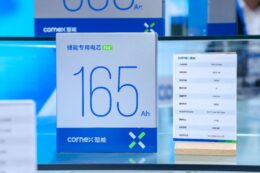
EVE Energy circulated a customer notice stating that domestic lithium battery products delivered from Sept. 1 would carry an additional 2% consumption-tax cost. Lishen Battery issued a similar notice in August. CATL also raised the listed price of its 314 Ah storage cell on its online marketplace from CNY 0.414/Wh to CNY 0.423/Wh on Aug. 1, although market supply conditions as well as the tax change contributed to recent cell-price increases.
Export costs exempt
Exports are treated differently. Batteries exported directly remain exempt from consumption tax, while eligible tax already paid on purchased batteries can be refunded. This should not be confused with China’s separate VAT export rebate policy: the VAT rebate for battery products was reduced from 9% to 6% in April and will be eliminated from Jan. 1, 2027.
The change fits into a broader withdrawal of tax preferences for mature Chinese clean-energy manufacturing. Solar-cell consumption tax will also begin at 2% in April 2027 before rising to 4% a year later, while VAT export support for solar products has already been removed. The differentiated treatment also gives the policy an industrial-policy dimension. Mature lithium-ion and vanadium-flow technologies are moving back toward normal taxation, while sodium-ion and solid-state batteries retain a temporary 2-4 percentage-point tax advantage. Huatai Securities described the exemptions as a clear policy tilt toward emerging technologies.
In effect, the tax changes could act as another supply-side reform: reducing support for mature capacity while preserving incentives for technologies still moving toward commercialization to guide industry development.
Written by
Comments

Popular Posts