Saft expands battery production in the US to meet local demand

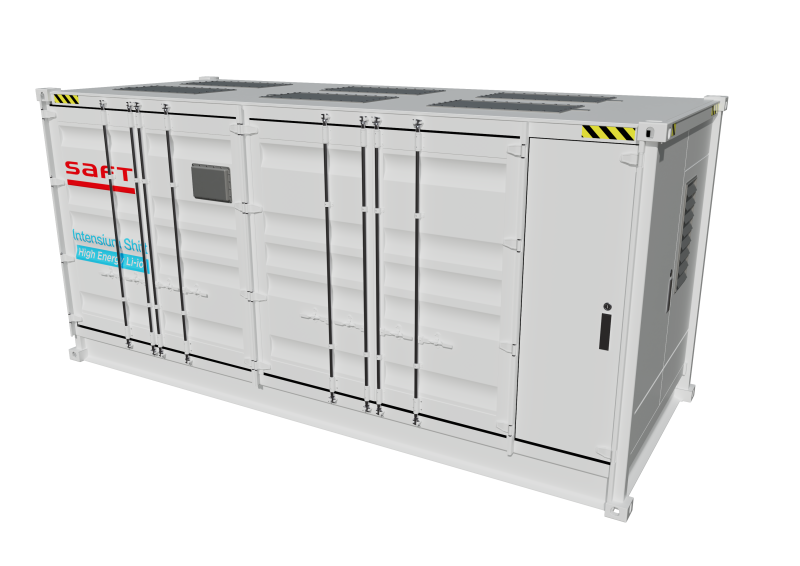
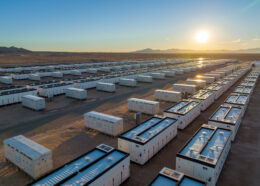
Saft, a subsidiary of TotalEnegies, has commissioned a new line at its Jacksonville factory in Florida to produce lithium-ion battery containers in a bid to expand its offer to American customers with products that qualify for the Income Tax Credit (ITC).
According to the French manufacturer, the investment will help it address “the booming US demand for energy storage projects by offering a solution with domestic content.” It will also create job opportunities, both direct and indirect, as well as strengthen the national supply chain, the company said.
“Currently, we are successful in serving the US market using battery containers produced by our global factories overseas. Now our strategy to expand Jacksonville’s capacity to reach more than 5 GWh in 2027 will enhance its capability to provide a faster response to serve US customers and reduce our environmental footprint,” said Hervé Amossé, Saft EVP for Energy Storage Systems.
By building up its US-based supply chains, Saft aims to significantly increase local content in its products and reach the Inflation Reduction Act 2022 requirements with its 5.1 MWh containers by 2026.
Saft launched its latest-generation product at ess Europe 2024 in Munich. It revealed plans to boost the energy density of its containers from the current 3.3 MWh to more than 5 MWh in 2026, as well as add a new AI algorithm to the I-Sight monitoring platform to improve the reliability and availability of energy storage installations.
At the time, it also announced that it would start the deliveries of battery storage systems produced in its US plant in Jacksonville from the second half of 2024.
The Jacksonville plant opened in 2011 after receiving a $95.5 million grant from the US Department of Energy. Saft later landed another $20.2 million in state and city financial incentives to build the 235,000-square-foot plant, but was asked to repay more than $320,000 in 2018 after it failed to create 279 jobs by the end of 2017, as stipulated in a 2009 economic development agreement.
Written by


Popular Posts