Volvo Energy launches 2 MWh containerized battery for C&I applications

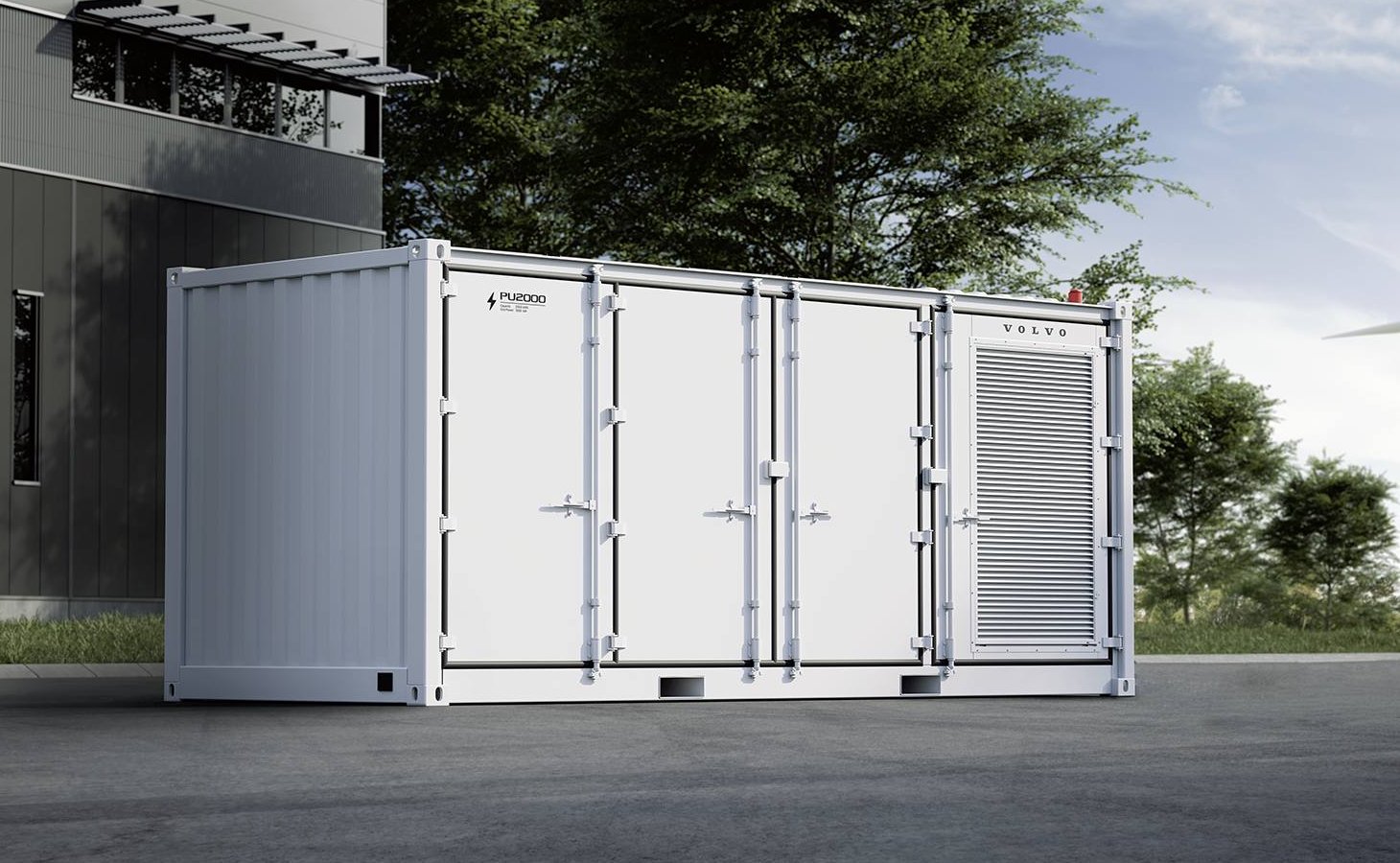
Volvo Energy, part of the Volvo Group, has launched a new battery energy storage system (BESS) called PU2000, offering 1 MW of power and 2 MWh of capacity, specifically designed for the commercial and industrial sectors.
The containerized system can be deployed in parallel configurations of up to 10 units. It uses lithium-ion nickel-cobalt-aluminum (NCA) cells with liquid cooling and is housed in an adapted 20-foot ISO container measuring approximately 6.1 x 2.5 x 2.6 meters and weighing 19,500 kg.
The PU2000 is an AC block design, integrating power conversion, site controller, metering, and switchgear in an all-in-one configuration. Volvo said the system was designed, developed, and manufactured in Sweden by Volvo Energy.
The system operates at 400 V (AC) with a 50 Hz grid connection and delivers round-trip efficiency above 90%. The maximum C-rate is 0.5 for a two-hour discharge duration, without an optional configuration for different capacities.
Volvo Energy states the system has an expected lifetime of over 6,000 cycles at up to two cycles per day with 94% depth of discharge. It operates from -20°C to +40°C, with an extended derating range of -30°C to +50°C with auto shut-off.
The enclosure features IP55 protection. Safety measures include smoke detection, an active fire suppression system utilizing a PFAS-free extinguishing agent, and deflagration panels that meet the expected certification standards, including UL9540A and compliance with IEC 62619.
As mentioned, the PU2000 can be deployed in parallel configurations and supports both grid-connected and island mode operation. Remote access uses 4G SIM card connectivity with Modbus TCP/IP and REST API communication protocols. Monitoring, scheduling, and control are available via web portal and mobile app.
Volvo Energy’s cloud-based EMS offers integration with EV charging infrastructure and participation in energy, flexibility, and ancillary grid markets. The company also offers end-to-end services, including engineering, delivery, installation, and commissioning, and is available in Europe.
Volvo’s sales office told pv magazine Italia that the solution can be pre-ordered in Italy and that the first deliveries are expected for the end of 2026.
Choosing NCA
Volvo Energy’s choice to select the NCA chemistry is notable, given that the stationary storage sector has moved mainly to LFP for C&I and utility-scale applications. NCA provides higher energy density, but LFP systems are seen to offer longer cycle life, better thermal stability, and lower costs.
Volvo made the same NCA choice with its PU500 system launched earlier in the year. ESS News has requested further information from the Volvo Group.
Written by


Popular Posts