Alpiq acquires France’s largest operational battery storage project

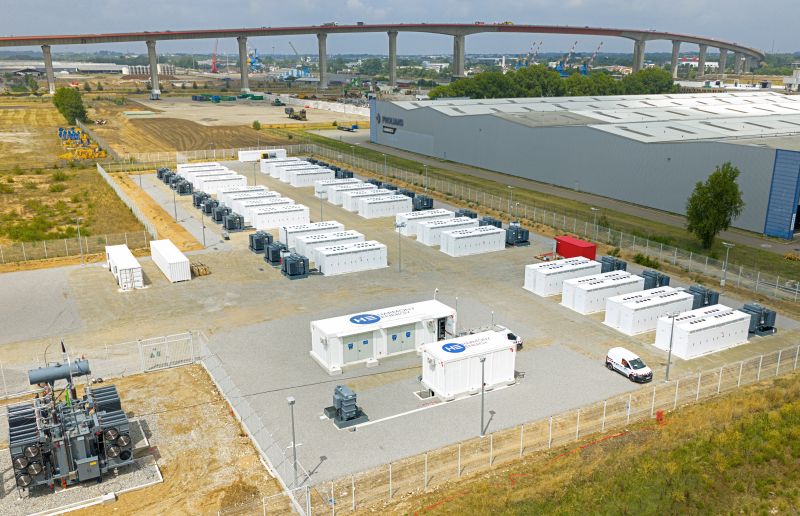
Harmony Energy has completed the sale of its 100 MW/200 MWh Cheviré battery energy storage system (BESS) in France to Alpiq, a Swiss electricity producer and energy services provider. The deal marks the second Harmony Energy project in France acquired by Alpiq and the first to be fully developed, constructed, and brought into commercial operation by Harmony Energy prior to sale.
Located at the Port of Nantes Saint‑Nazaire Harbour, the Cheviré project is France’s first operational large‑scale, two‑hour duration battery storage facility. Utilising Tesla Megapack and Autobidder technologies, the site was energized in August and inagurated in December.
“The development, construction, grid connection and commissioning of France’s largest battery storage facility took just three years, a remarkably short timeframe for a project of this scale,” Andy Symonds, CEO of Harmony Energy France, said.
Construction began in summer 2024, and within one year the project achieved energisation. The project is built on the grounds of the former Cheviré power plant, which operated on fossil fuels for more than three decades.
As part of the Cheviré sale to Alpiq, Harmony Energy will continue to play a key role as asset manager, ensuring the site’s performance and operational optimisation.
Cheviré is Alpiq’s second asset in France. Another 100 MW / 200 MWh BESS facility in La Corne-en-Vexin, also acquired from Harmony Energy in 2024, is currently under construction and is expected to be operational by 2027.
Overall, Alpiq now holds a BESS portfolio of more than 750 MW across France, Germany, and the Nordics, with nearly half already operational or under construction. The company also plans further investments in BESS and other flexible energy storage systems in key European markets, aiming to expand its portfolio to multiple gigawatts of installed capacity over the coming years.
Written by



Popular Posts