Peak Energy, RWE to deploy first sodium-ion battery in MISO

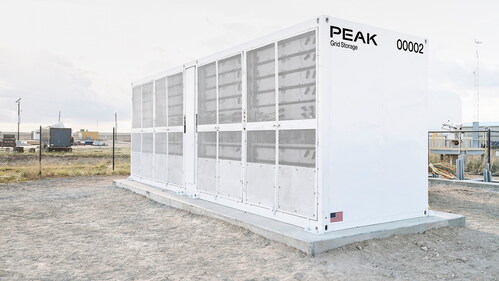
The Midcontinent Independent System Operator (MISO) will receive its first sodium-ion battery thanks to a dual pilot project from battery company Peak Energy and global energy company RWE Americas. The project comes a mere eight months after Peak deployed the largest grid-scale sodium-ion storage system in the United States.
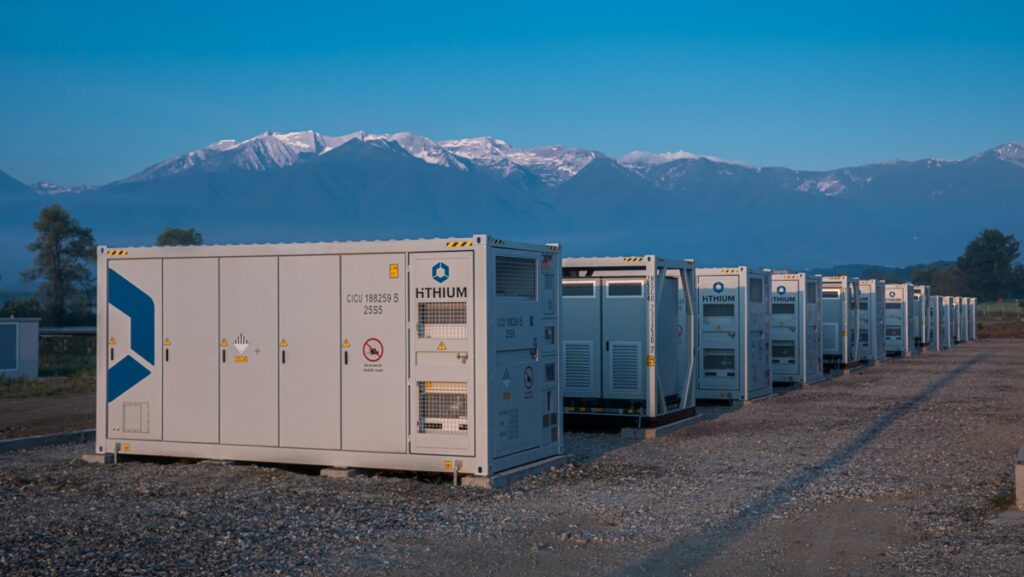
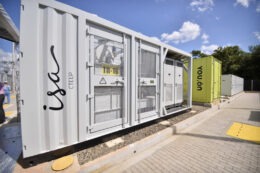
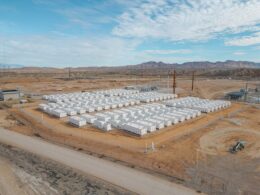
Set to be deployed in Eastern Wisconsin, Peak’s passively cooled, grid-scale energy storage system could be the first ripple indicating MISO’s pivot toward next-gen, non-lithium storage as the grid operator faces capacity constraints, rising costs and solar project cancellations that some industry experts suspect could slow battery deployment.
Sodium-ion cells are particularly well-suited for the Midwest, given that they can operate safely at wide temperature ranges without negative impacts on performance. By integrating passive cooling and prioritizing low degradation designs, Peak systems should reduce overbuild, require less routine maintenance and waste less energy, to the tune of cutting 90% of auxiliary power use. According to the company, their proprietary ESS can reduce the lifetime cost of energy stored by an average of $70/kWh, which is around half the total price of an average battery system today.
This could have a significant impact in MISO, which, like many Eastern markets, has struggled to catch up to California and Texas’ storage deployment. According to a 2025 report from Aurora Energy Research, installing 10 GWh of battery storage capacity by 2035 could slash up to $27 billion in total MISO system costs compared to a baseline scenario. Doing it with Peak’s systems could cut the total storage system costs down another 25% compared to lithium-ion options.
“Delivering the lowest cost electron is Peak Energy’s north star, and we’re proud to work with RWE Americas to deploy our cost-optimized batteries on the grid,” said Landon Mossburg, the CEO of Peak, in a statement.
Peak is set to deliver up to 4.75 GWh of storage between 2027 and 2030 as part of a multi-year phased agreement with Jupiter Power that’s potentially worth more than $500 million, as well as 1.5 GWh for Energy Vault as part of a new full-stack energy storage platform dedicated to AI infrastructure. The company, which emerged from stealth in 2023 with a $10 million seed round and raised $55 million in Series A funding a year later, plans to break ground on its first US giga-scale manufacturing facility in 2027.
Written by



Popular Posts