German state of Bavaria wants to end ‘wild growth’ of battery storage

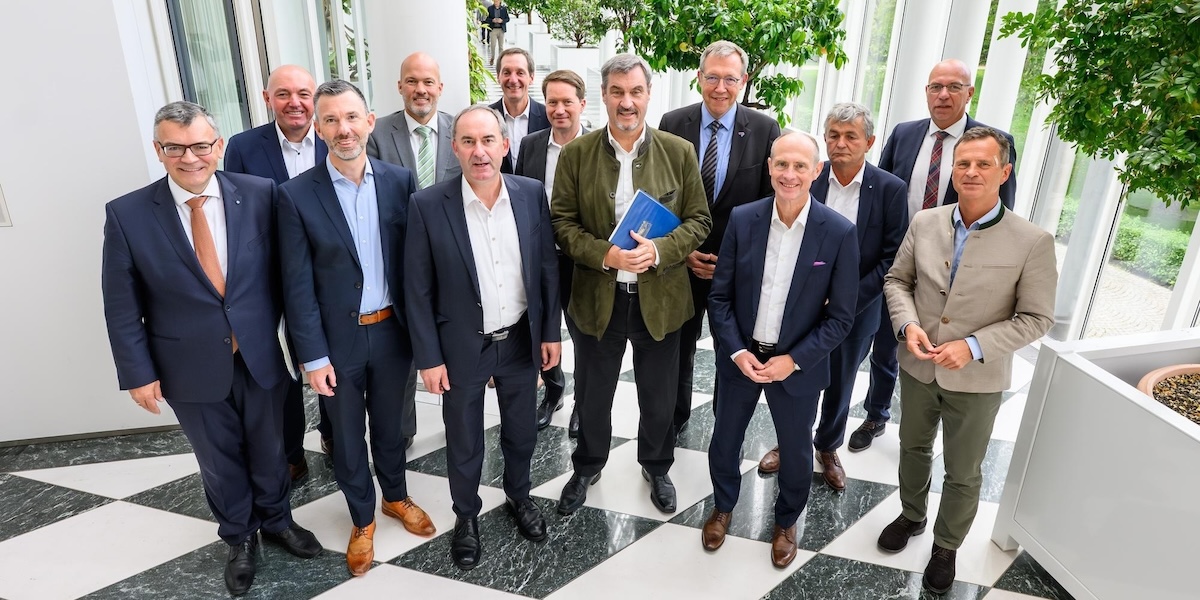
Bavaria wants to “prioritize large consumers such as data centers for grid connection,” state premier Markus Söder (of the Christian Social Union party) told the public after last week’s Bavarian Power Grid Summit. Söder had invited grid operators and business and politics representatives to the Munich State Chancellery on Wednesday.
Economics and Energy Minister Hubert Aiwanger (of the Free Voters party) said, “The current, uncontrolled growth must come to an end” and added, the federal government must “more specifically manage the necessary, market-driven expansion of battery storage systems.” Aiwanger criticized the “first-come, first-served” principle by which grid connection requests are processed in the order they are received. He is not alone in this; BESS project developers and grid operators have been complaining about it for a long time. Germany has 500 GW of grid connection requests, many times more than what is expected to be needed, and implemented, in the coming years.
In Bavaria, however, the backlog of applications is not solely regarded as a problem for the coordinated expansion of battery storage capacity. Aiwanger said the state’s numerous BESS projects will come “at the expense of other, current and future grid connection applicants, such as gas-fired power plants, industry, and data centers.”
Gas-fired power plants – which, “if possible,” should also be hydrogen-capable – are “the natural partner for renewables,” said Aiwanger, adding, “without gas power in reserve, the expansion of renewables also reaches its limits.” The state minister said the goal must instead be “that, when there is a shortage of switchgear in the substations, a mix of battery storage systems, generators such as hydrogen-capable gas-fired power plants, and consumers such as industry or data centers, are connected to the grid.”
As a first step in that direction, Bavaria and Lower Saxony have submitted a motion to the Bundesrat calling for the federal government to remove BESS from the scope of the Power Plant Grid Connection Ordinance.
“The motion received an overwhelming majority,” Aiwanger said. He called for further systemic incentives, including construction cost subsidies and grid fees, to ensure storage systems are built in locations with the best possible grid connections and “feed into the grid in the most beneficial way possible.” Proposals along those lines can also be found in a monitoring report on the energy transition and in a 10-point plan presented, at the same time, by Federal Minister for Economic Affairs Katherina Reiche (of the Christian Democratic Union party).
Bavaria reportedly submitted a plan to the federal government in the summer containing 11 measures to accelerate grid expansion and reduce red tape. Key elements of that have been submitted to the Bundesrat’s Economic Affairs Committee. The next plenary session of the chamber of states will take place on Friday.
Bavaria’s 11-point plan reportedly contains suggested measures including waiving the traditional, analog delivery of planning approval decisions; procedural freedom for maintenance measures on the power grid; and accelerating assessments under species-protection law. BESS are not said to play a specific role in the document.
From pv magazine Deutschland.
Written by




Popular Posts