Huawei and Aggreko win Brazil’s largest battery storage contract, will replace diesel in the Amazon


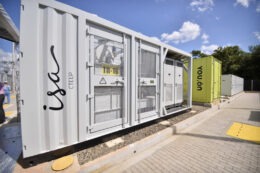
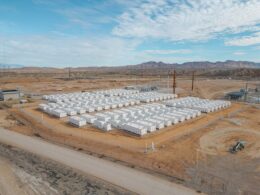
A consortium formed by Huawei Digital Power and British company Aggreko is set to deploy the largest integrated battery energy storage system (BESS) in Brazil in the Amazon region, through a hybrid project combining solar plants and storage to supply electricity to isolated communities in Amazonas state.
The initiative, the result of a public tender launched by the Brazilian federal government in 2025, involves the installation of 110 MWp of photovoltaic plants and 120 MWh of battery capacity distributed across 24 locations, including mid-sized municipalities such as Tefé. Total investment is estimated at $165 million (Brazilian R$850 million), of which R$510 million is financed through a fund linked to Axia Energia, with the remainder coming from the private partners.
According to executives involved in the project, the goal is to reduce reliance on diesel-fired thermal plants, still necessary to ensure energy security in isolated systems, by cutting their operating hours and increasing the share of renewable energy in the local grid mix. This transition could result in annual savings of 37 million liters of diesel and a reduction of 104,000 metric tons of equivalent CO₂ emissions, helping to ease financial burdens such as the Fuel Consumption Account (Conta de Consumo de Combustíveis, CCC).
Beyond its unprecedented scale on Brazilian soil, the advanced use of battery technology allows the systems to store surplus solar energy during the day and deploy it at night or on overcast days, improving the quality and stability of supply in areas where conventional generation is both costly and polluting. The project is slated for implementation over up to three years, with the first units coming online between 2027 and 2028.
Energy transition specialists note that initiatives like this could serve as a catalyst for broader adoption of storage systems in Brazil, particularly in remote regions outside the National Interconnected System (Sistema Interligado Nacional, SIN), paving the way for hybrid models that combine solar energy, batteries, and other renewable sources.
From pv magazine Brazil.
Written by


Popular Posts