“MACSE price levels were driven by bearish battery cost expectations. The market reality today is very different.”

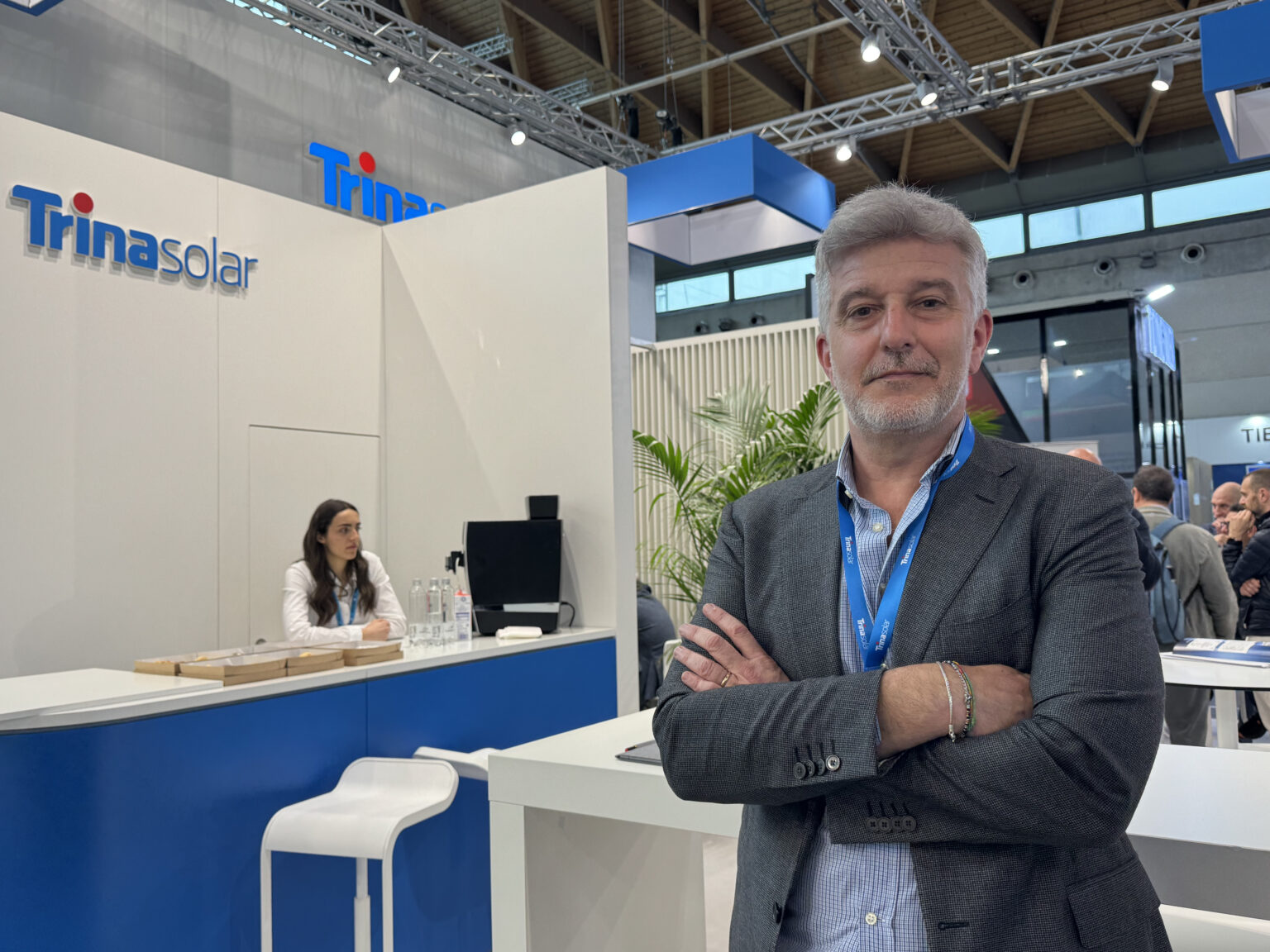
The push to reduce production costs for BESS solutions has become essential. However, the goal is not to increase margins but to offset rising raw material costs amid a period of significant market complexity, Gabriele Buccini, Head of Utility Storage at Trina Solar, told pv magazine Italia.
“You can’t work miracles, though, so the problem remains: there will certainly be an impact for everyone,” Buccini said.
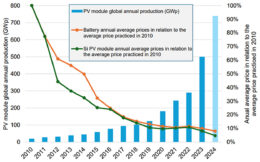
As several analysts have noted, the price levels reached by MACSE were based on rather bearish expectations for battery prices. According to these projections, price compression was expected to result from a fully integrated production chain. However, such a structure requires a certain level of market stability to scale and lower costs – stability that has since disappeared.
“Prices have risen and have been clearly volatile over the past month, moving up and down – even more so considering what is happening now with the war,” Buccini said. “We are obviously talking with lithium suppliers to understand how to hedge. We are looking for solutions, and China is also searching for them, but the problem is not easy to solve. Volatility exists, and someone has to take responsibility for it, meaning additional risk compared to six months ago.”
Responding to a question from pv magazine Italia, Buccini acknowledged that the assumptions that led to MACSE price levels now appear unrealistic.
“Many MACSE prices were based on September and October market conditions. I don’t know how many of those projects included some form of indexation. If they didn’t, that is clearly a problem for battery suppliers now. We are not trying to reopen closed contracts; instead, we are trying to find internal solutions to minimize the impact.”
Despite current challenges, Buccini said opportunities extend beyond MACSE, with the capacity market representing another important mechanism.
“We are also seeing many players interested in developing projects with some form of tolling agreement or PPA. This has remained true even after the presentation of the Bollette Decree,” he said. “What we have noticed is that, after last year’s MACSE auction and the price levels recorded, many developers who were hoping for fixed revenues are now reconsidering that option. MACSE does provide revenue certainty, but at those price levels many are considering alternative strategies.”
Buccini added that upcoming capacity market auctions and future MACSE rounds will provide further price signals, not only to the market but also to BESS solution manufacturers.
Alongside market volatility, Chinese suppliers are also facing regulatory risks linked to geopolitical dynamics. Recently, for example, the European Commission presented a new energy package aimed at strengthening support for European industry.
Buccini noted that BESS solutions essentially consist of three core components: batteries, power conversion systems (PCS), and control systems. According to Trina, the company already uses European control systems, while for PCS it offers both Chinese-manufactured versions and equipment sourced from European suppliers.
“Of course, the batteries come from China,” Buccini said. “If political pressure pushes toward a European supply chain, we will adapt accordingly. But even if such a direction emerges, we are confident it will not happen within six months.”
Trina Storage said it is actively engaged in discussions with European institutions on these developments. Despite regulatory and market uncertainties, however, the Italian market remains a key focus for BESS solution providers.
“The Italian BESS market is among the most interesting in Europe,” Buccini said. “Since last year we have signed several projects in Italy, totaling just under 2 GW. Last week we attended the inauguration of a 1.1 GW site in Turin – the Minister of Energy was also present.”
From pv magazine Italy
Written by