New cost-saving copper welding technique for battery cells revealed by Fraunhofer

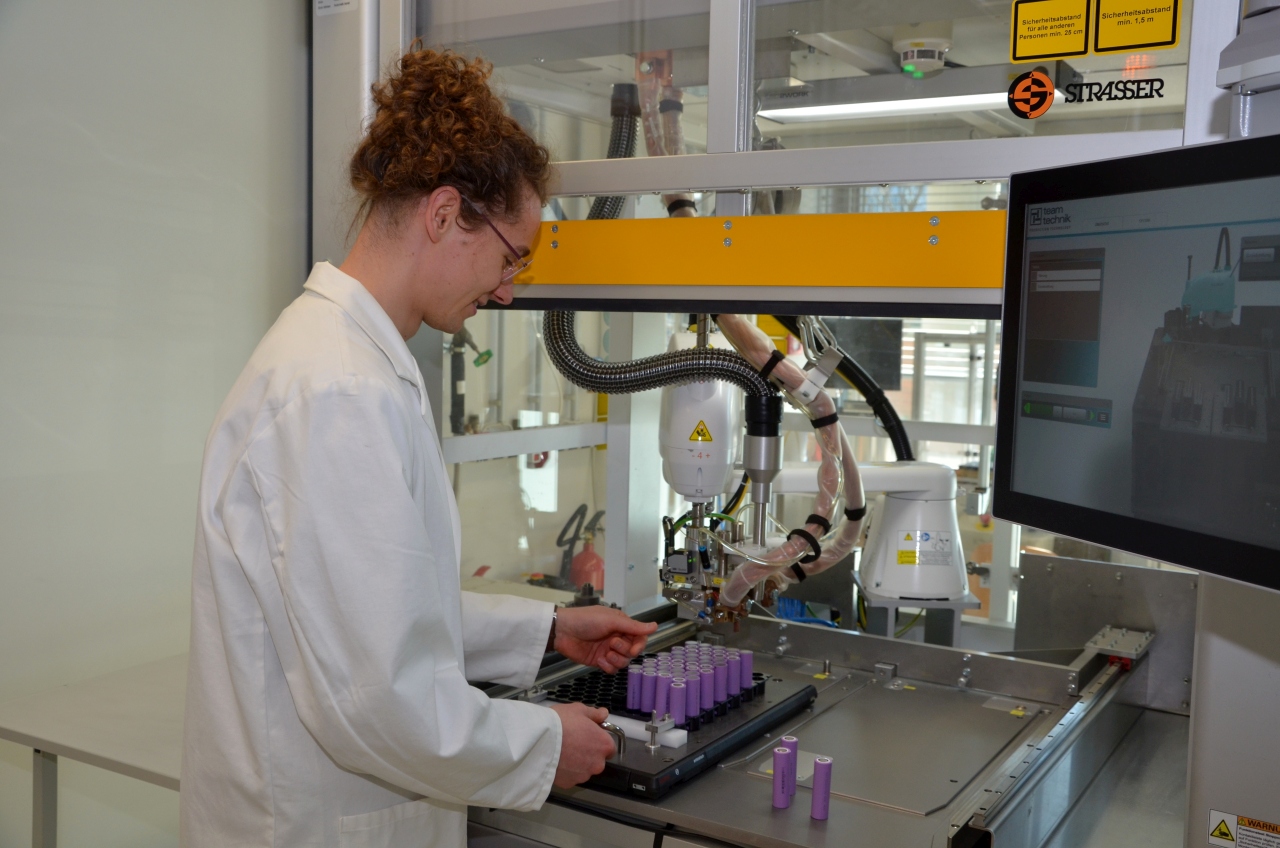
German researchers have successfully replaced steel connectors with copper in a welding process for connecting battery cells that uses proven machinery.
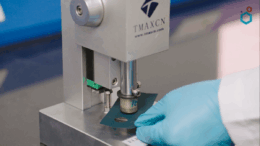
Scientists at Fraunhofer Institute for Solar Energy Systems (ISE) and German manufacturer Smart Battery Solutions have been working together to develop a new process for replacing steel with copper, without switching from cost-effective projection welding to a laser welding system.
Battery cells are typically electrically connected to one another by welding steel. Replacing steel with copper has been possible before, but not while using cost-effective and industry-proven projection welding systems, according to the researchers.
This has posed a challenge for German battery makers, according to Achim Kraft, head of the module technology department at Fraunhofer ISE. The researcher explained that the improving performance of battery cells that are bought from external suppliers has made interconnection improvements necessary to reduce battery weight.
“These cells are becoming larger and more efficient. Consequently, the steel connections must become increasingly thicker and heavier. It has therefore been long been clear to the battery industry that, in the medium term, all interconnections should be based on copper,” Kraft said.
Fraunhofer ISE project manager Christian Schiller added that “most importantly” battery manufacturers will not need to switch to laser welding to electrically connect the copper connectors in a battery module. The system developed by the German government funded efforts does not need the copper to be tinned or otherwise pretreated, according to the researcher.
Smart Battery Solutions will be the first battery manufacturer to introduce the new process on its production line, and company representative Monika Mertig said that new batteries with copper connections will be used in the company’s UniPower product range.
“The fact that we only need to adapt our proven interconnection process for this and don’t have to completely replace it with new equipment makes the transition much easier for us,” said Mertig. “We see this R&D success as a major opportunity for German battery manufacturers, many of which are small and medium-sized enterprises.”
The copper connection research was conducted as part of the BatCO₂tiv – Battery Interconnection: Automated, CO₂-Reducing, Collaborative. Subproject: Process Development and Evaluation for Projection Welding project, which is funded by the German Federal Ministry for Economic Affairs and Energy.
More about
Written by




Popular Posts