Tight deadlines threaten Brazil’s anticipated battery storage auction

As the Brazilian government delays the publication of critical regulations and auction rules, the country risks missing out on a globally proven solution for grid flexibility, a necessity increasingly amplified by Brazil’s surging share of renewable energy.
With pending discussions at the Ministry of Mines and Energy (MME) and the National Electric Energy Agency (Aneel), the market for utility-scale battery systems in Latin America’s largest economy remains in a holding pattern. Industry leaders warn that the window of opportunity is closing fast in what is already a politically complex year.
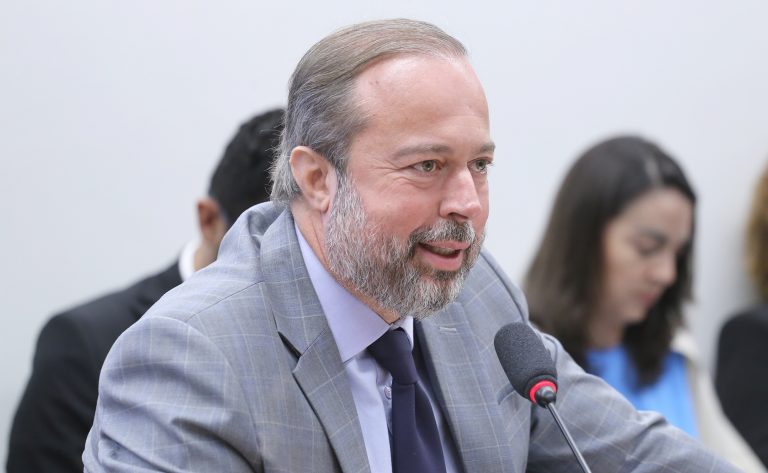
“The ministry has confirmed the auction for this year, including a directive ordinance for April. However, based on the auction schedule, we need about four months just for Aneel to approve the bidding framework, and then another 30 days before the auction date,” warned Fábio Lima, Executive Director of the Brazilian Association of Energy Storage Solutions (Absae).
Crucially: “Realistically, the ordinance must be published within the next 15 days to make an auction feasible this year. Beyond that, a 2026 auction is no longer credible.“
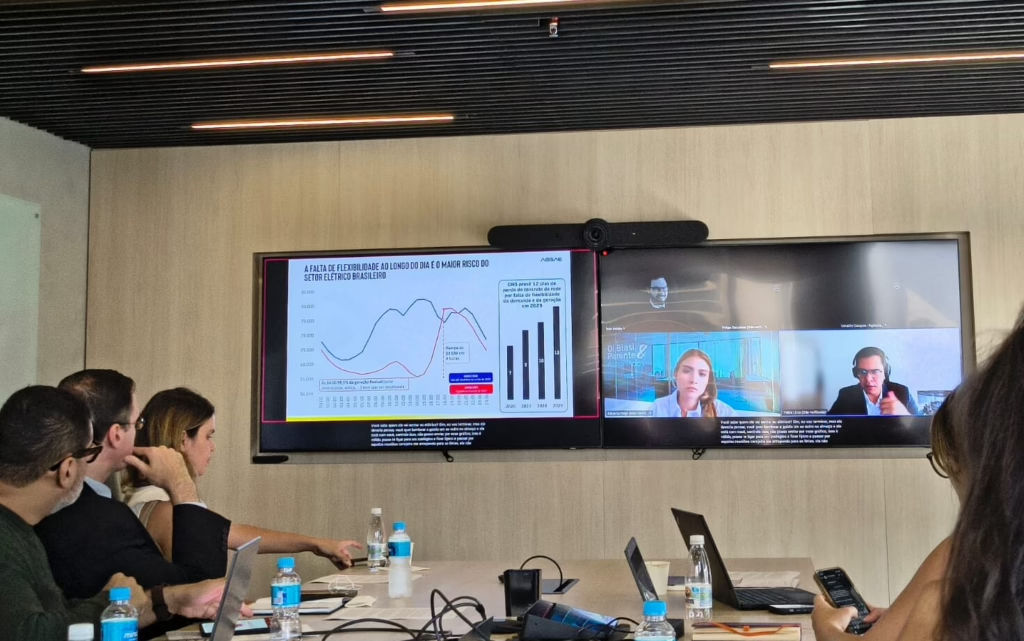
Lima delivered these remarks on April 14th during an industry event hosted at the São Paulo headquarters of Norwegian renewable energy company Scatec.
The urgency is compounded by domestic events. “This is one of the main agenda items for Aneel, and there is immense pressure from the private sector because this is not an easy year,” added the Head of Institutional and Government Relations at law firm Di Blasi, Parente & Associados. “We have elections, so the second half of the year takes on a completely different political focus, and the World Cup in the middle of the year also disrupts the country’s political and regulatory calendar. Time is running out to resolve these regulatory issues, which are vital for participants to successfully structure their bids.”
The Regulator’s Dilemma
Beyond the MME’s auction guidelines—which were placed under public consultation last November—market agents are waiting for clear rules on grid connection and transmission usage fees for Energy Storage Systems (ESS). A vote on Aneel’s public consultation regarding this matter (CP 39) was postponed last week after Director Willamy Frota requested more time to review the process.
At the heart of the regulatory debate is how to legally classify a battery and integrate it into existing frameworks.
“Batteries possess different characteristics from anything we have addressed so far,” explained Felipe Calabria, Aneel’s Superintendent of Generation Services and Electric Energy Market Regulation. “It is neither a classic consumer nor a classic generator. The law settled this by allowing us to classify it as storage.”
According to Calabria, Aneel’s current focus is on how to integrate storage into the National Interconnected System in a way that optimizes grid operations while providing the right economic signals for battery investments.
A major concern for investors is the risk of “double charging” for grid usage—being taxed both when the battery charges (draws power) and discharges (injects power). In a recent Aneel session, Director Fernando Mosna argued that storage systems should only be charged for the energy they inject into the grid. Calabria noted that the momentary consumption and subsequent return of slightly less energy (due to the typical 85% round-trip efficiency of battery energy storage systems, or BESS) is viewed by the regulator as a technical loss.
Investor views
From an investment standpoint, a lighter tariff model is highly preferred, noted Bruno Cazarotte, Project Manager at Scatec. The Norwegian firm is currently evaluating various BESS project configurations for the Brazilian auction—ranging from standalone systems to hybrid setups at existing power plants, or partnerships with energy traders and transmission companies. However, a final investment decision hinges on clear regulatory rules.
“The new business models enabled by future regulations must include remuneration for the multiple services storage systems provide,” said Aleksander Skaare, General Manager of Scatec. “They can store energy when prices are lowest during the day and dispatch it during peak demand. Furthermore, they contribute to grid stability, preventing blackouts and fluctuations, while maintaining an energy ‘reserve’ and reducing transmission line overload. A central issue is how these services will be compensated. Brazil must reach a technical, economic, and financial balance among all stakeholders.”
Brazil’s “Energy Paradox”, international examples
Brazil is currently navigating an “energy paradox,” according to Absae’s Lima. Despite record levels of renewable generation, the country faces a “capacity blackout” during peak hours. Without utility-scale batteries to store excess solar and wind energy, the grid is forced to rely on expensive and polluting fossil-fuel thermal plants to meet peak demand.
Absae estimates that battery storage is 46% cheaper than maintaining thermal plants as capacity reserves, representing potential savings of R$3 billion (~600 million USD) per year for Brazilian consumers. Furthermore, high renewable curtailment rates, averaging around 20% nationwide, add immense pressure to implement a flexibility solution.
While Brazil debates grid access, remuneration, and auction rules, other global markets are already leveraging hybrid projects to ensure energy security.
As a prime example, Scatec recently signed a massive contract for 3.9 GWh of BESS and 1.95 GW of solar for the Energy Valley project in Egypt. The Egyptian government procured the BESS as strategic infrastructure to provide firm power supply, smooth out generation ramps from variable renewables, and ensure overall grid stability, a blueprint Brazil could soon follow if regulators can meet their tightening deadlines.
From pv magazine Brazil.
Written by




Popular Posts