Key takeaways from ESIE 2026 (Pt II): Four technology shifts reshaping China’s storage market

Note: Don’t miss part I of the ESS News report from ESIE 2026.
Part II: ESIE 2026 showed a storage sector that is broadening technologically even as parts of the core architecture begin to converge. Alongside the rise of mainstream 588 Ah cells and grid-forming PCS, the exhibition highlighted four adjacent shifts that may matter just as much for the next phase of competition: AI-enabled operations, sodium-ion commercialization, larger and more integrated system design, and a move from passive protection toward intrinsic safety.
AI is moving from marketing language to measurable operational claims
For several years, energy storage suppliers have talked about digitalization and intelligent or smart operations. At ESIE 2026, some of those claims began to look more concrete. The discussion was no longer only about dashboards or visualization, but about measurable gains in forecasting, trading, fault detection and asset optimization across the full project lifecycle.
Envision made one of the strongest cases, linking its weather and energy models to project planning, dispatch and trading, and claiming a 4% to 8% increase in lifecycle IRR for storage stations. Sungrow also leaned heavily into AI, pairing its modular PCS platform with root-cause analysis capabilities it said could reach 99% accuracy. HyperStrong similarly framed AI as an operating tool rather than a software add-on, saying its AI agent can actively optimize station revenues while standardized delivery can shorten grid-connection time by 30%.
This remains a category that needs careful filtering because the intelligent functions must be tied to quantifiable acceptance criteria. Even so, ESIE ’26 suggested that AI in storage is moving from unspecific vague claims to specific operational metrics.
Sodium-ion is no longer just a hedge technology
Sodium-ion batteries have been discussed for years as a lower-cost or safer complement to lithium-ion, but ESIE 2026 suggested a more practical phase is beginning. Rather than treating sodium as potential future chemistry, several suppliers presented it as a near-term option for selected use cases such as extreme climates, safety-sensitive deployments and AI data center backup.
CATL showed a storage sodium-ion battery above 300 Ah with 97% efficiency, more than 15,000 cycles and a platform design compatible with its existing 587 Ah lithium systems. That compatibility angle may prove commercially important because it lowers the switching cost for integrators. Envision, meanwhile, displayed a 180 Ah-plus sodium-ion storage cell rated for operation from -40 C to 70 C and at least 20,000 cycles, explicitly linking it to differentiated AIDC and extreme-temperature applications. Hithium also brought a 162 Ah sodium-ion product positioned for harsh environments.
None of these mean sodium-ion is about to displace LFP in mainstream projects. But the tone has changed and we may well be witnessing the infancy of a concrete future aspect of ESS versus concept.
System design is shifting toward larger and denser platforms
The show also reinforced a broader system-level trend: storage products are being redesigned not only for lower cell cost, but for lower total project complexity. More suppliers are packaging higher energy content into standard footprints while using integration to reduce balance-of-system cost, onsite work and land use.
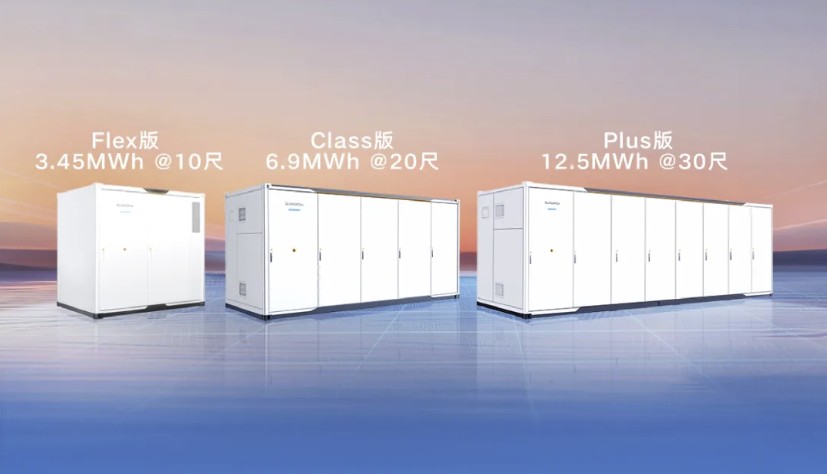
Envision’s 12.5 MWh AI storage system was among the clearest examples, using its 790 Ah cells and large-array design to cut station footprint by 37.6% and raise grid-connection efficiency by more than 50%. Pylontech used 601 Ah cells to build an 8 MWh system that it said could reduce part count by 50% and land occupation by 38%. EVE Energy showed a 6.9 MWh system in a 20-foot container, while REPT’s 6.25 MWh system was pitched around higher energy density, lower integration cost and reduced site labor.
The implication is straightforward: integration is becoming a competitive lever in its own right. Logistics when it comes to density and overall weight remain an issue.
Safety is shifting to intrinsic design
Safety was not a new theme at ESIE, but the nature of the discussion appeared to evolve. Instead of focusing only on downstream fire suppression and layered compliance, more exhibitors emphasized cell-level and chemistry-level measures intended to reduce thermal runaway risk at the source.
Shuangdeng’s semi-solid-state 755 Ah system was presented with reduced liquid electrolyte and a solid-electrolyte framework to lower the root risk of thermal runaway. Inpow Battery made a similar pitch with its 587 Ah semi-solid-state “Qiankun” cell, claiming safety performance close to all-solid-state levels at near-liquid-battery cost, supported by crush, cut, hot-box and burn testing. Envision addressed the issue from a different angle, saying its 790 Ah platform uses thermal-gradient design and directional venting channels to handle the safety challenge posed by larger cells.
That matters because trends converge: bigger cells, increasing energy density, potentially more significant risk. Intrinsic safety solutions will need to advance and be proven by third-parties, just as quickly as integration norms.
Written by


Popular Posts