EU to cover only 21.4% of battery demand by 2030 despite global market surge; costs remain up to 50% higher than Asia


A report from the European Commission’s Joint Research Centre (JRC) warns of the urgency of accelerating battery manufacturing in the European Union. According to the study Battery Technology in the European Union, prepared by the Clean Energy Technology Observatory (CETO), the EU will only cover 21.4% of its battery demand in 2030 and maintains a cost gap of up to 50% compared to Asia, despite the global market surge (+29% in 2024).
The report offers a comprehensive analysis of the sector’s status, addressing technological evolution, innovation, value chains, and markets both in Europe and on a global scale.
The document highlights the existing gap between the EU and world leaders in battery production. Despite efforts to bolster industrial capacity, Europe has yet to reach a solid competitive position against powers like China or the United States. In 2024, global demand for lithium-ion batteries stood at 1,545 GWh (+29%), of which 1,051 GWh corresponded to electric vehicles and 370 GWh to stationary storage.
One of the main weaknesses is the heavy reliance on key materials. The EU barely covers 4.9% of its cathode production targets and a mere 0.1% for anodes, which limits its industrial autonomy and conditions its competitiveness.
The gap compared to Asia (especially China, South Korea, and Japan) is due to structural factors such as high energy costs, higher labor costs, and dependence on imports. Although the price of lithium-ion batteries fell by 20% in 2024, facilitating the expansion of the electric vehicle, batteries produced in Europe remain between 15% and 50% more expensive than Asian counterparts.
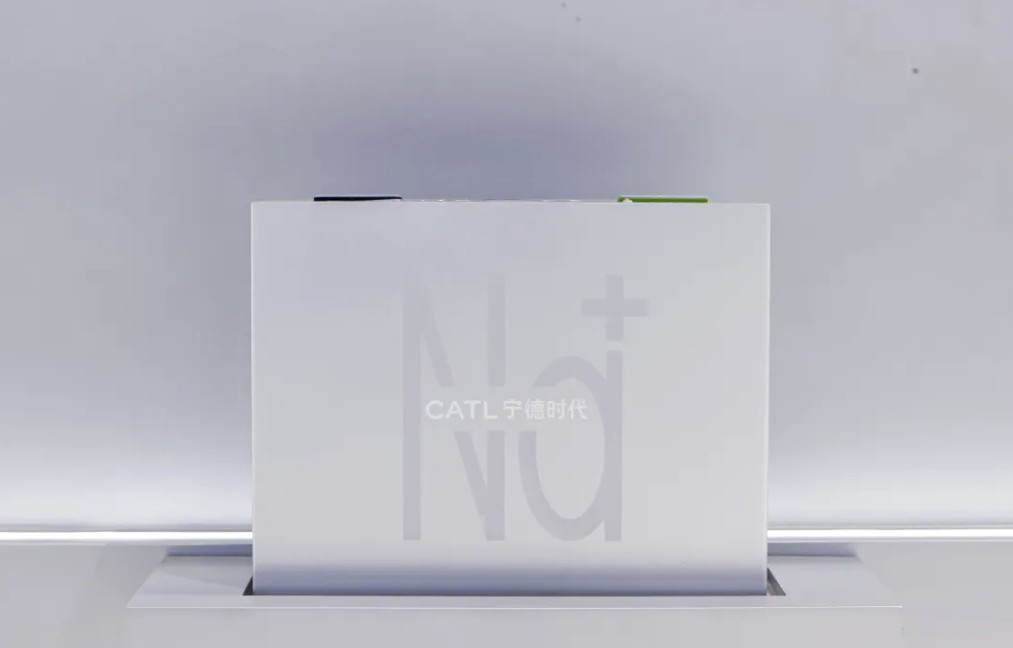
In the technological field, the report warns of a loss of European leadership in R&D. While lithium-ion continues to dominate the market, emerging technologies such as sodium-ion, lithium-sulfur, and solid-state batteries are advancing rapidly and could become widespread within a three-to-five-year horizon, which would alter the competitive balance.
Furthermore, a growing specialization by application is emerging: while lithium-ion will remain key for high-end electric vehicles, alternatives like sodium-ion or lithium-sulfur will gain weight in lower-cost segments and in stationary storage. The report warns that the EU must position itself in these technologies if it wishes to maintain relevance in the global market.
In industrial terms, European production capacity has grown, but it remains far from covering future demand. In 2024, it reached only 21.4% of the needs projected for 2030 (compared to 17.2% in 2023). Additionally, production in Europe continues to be heavily concentrated in Asian companies such as LG Energy Solution, SK Innovation, and Samsung SDI, which control more than 80% of the market.
External dependence is also reflected in the trade balance: in 2024, the EU imported batteries worth €16.5 billion, with more than 85% coming from China. This situation exposes Europe to risks derived from global market volatility and reinforces the need to boost its own industrial base.
Finally, the report warns that, without urgent measures, the EU could be relegated to premium battery niches for high-end electric vehicles, while global growth shifts toward more economical solutions (such as LFP and sodium-ion batteries) that are rapidly gaining ground.
Written by
Comments


Popular Posts