Japan awards 1.25 GW of battery storage in capacity market auction

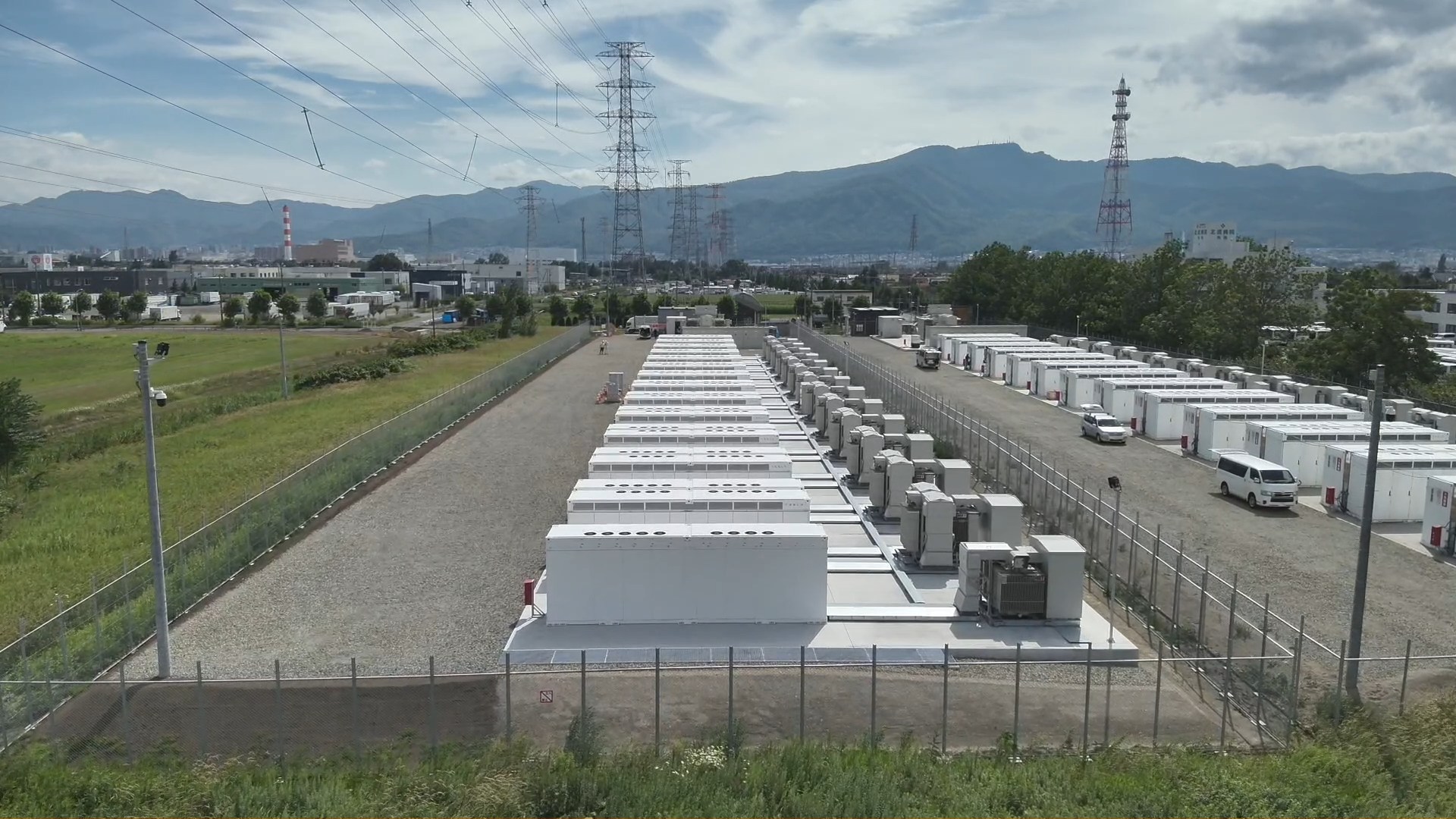
Japan’s battery storage sector secured 1.25 GW of awarded capacity across 19 projects in the country’s latest long-term decarbonization auction (LTDA). Lithium-ion and non-lithium-ion battery storage projects were both successful in the latest capacity market auction.
The Organization for Cross-regional Coordination of Transmission Operators (OCCTO) awarded a total of 7.3 GW (derated) across 32 projects in the FY2025 LTDA round. Of that total, 4.26 GW was awarded to decarbonization-source projects and 3.04 GW to LNG-fired thermal generation projects.
Lithium-ion battery storage accounted for 551 MW of awarded capacity while non-lithium battery storage technologies secured 699 MW at auction. Combined, battery storage accounted for nearly 30% of all capacity awarded in the decarbonization category despite a major decline in bidding volumes.
Battery storage bid capacity more than halved year-on-year, falling from nearly 7 GW in FY2024 to 2.73 GW in FY2025. The decline followed significant rule changes introduced for the latest auction round.
Unlike previous LTDAs, storage projects with durations shorter than six hours were no longer eligible to participate in FY2025. The previous categorization system based on storage duration was also abolished. Instead, projects were divided into two broad categories. One included pumped hydro energy storage (PHES) repowering projects and lithium-ion battery systems, and the other covered new PHES developments, non-lithium-ion battery technologies, and long-duration energy storage (LDES).
The latest auction also introduced stricter requirements around battery cell procurement and cybersecurity compliance.
Despite the changes, the 1.25 GW secured by battery storage in FY2025 represented a modest drop on the 1.37 GW awarded in the FY2024 auction.
Two pumped hydro storage projects also secured contracts in the auction: the repowering of Tokyo Electric Power Renewable Power’s Shiobara Power Station Unit 2 and the construction of a new unit at Hokkaido Electric Power’s Kyogoku Power Station.
Beyond storage, nuclear power accounted for the largest share of awarded decarbonization capacity, representing roughly 46% of the category total. The auction also marked the first successful awards for pure hydrogen-fired thermal generation projects, with contracts awarded to projects developed by CEF H2 and Hoku Energy. Other successful projects in the decarbonization category included ammonia co-firing retrofits for existing thermal plants and one biomass generation project.
The LNG-fired thermal category saw four winning projects.
More about
Written by
Popular Posts