BYD, Corvus join forces to scale LFP batteries for electric vessels

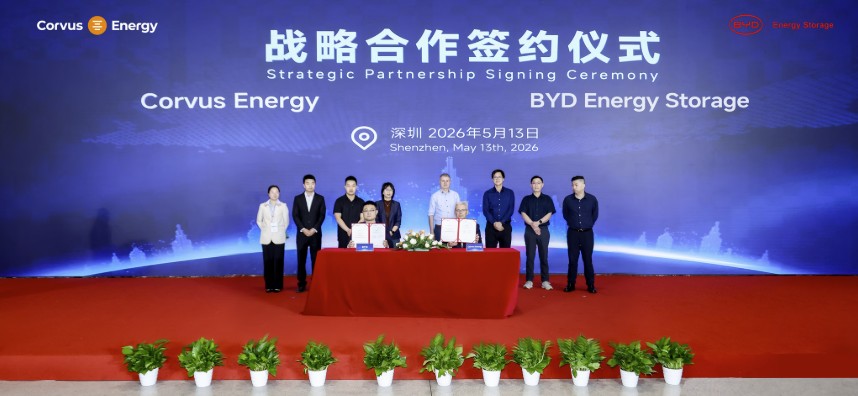
BYD Energy Storage and Norway-based Corvus Energy have signed a strategic cooperation agreement to co-develop next-generation lithium iron phosphate battery systems for maritime applications.
The agreement was signed on May 13 during CIBF 2026 in Shenzhen. It builds on a memorandum of understanding (MoU) signed in December 2025 and formalizes a deeper phase of cooperation between the two companies, covering technology collaboration, resource sharing and global market expansion.
Under the agreement, the partners will focus on high-rate LFP marine battery systems designed for demanding vessel operating conditions. Corvus said the cooperation will combine its marine system integration experience with BYD Energy Storage’s battery cell technology to develop lower-cost, safe and reliable systems for maritime use.
The cooperation follows a “cell-to-system” division of roles. BYD Energy Storage is expected to contribute LFP cell technology, battery management know-how and large-scale manufacturing capabilities. Corvus Energy will focus on integrating the cells into marine energy storage systems, supporting certification, system design and market deployment for global customers.
Corvus, headquartered in Bergen, Norway, describes itself as a leading supplier of zero-emission solutions for maritime, offshore and port applications. The company said it has supplied more than 1,350 projects across offshore, passenger, commercial and industrial marine segments, and that more than 50% of vessels equipped with zero-emission technology rely on Corvus systems.
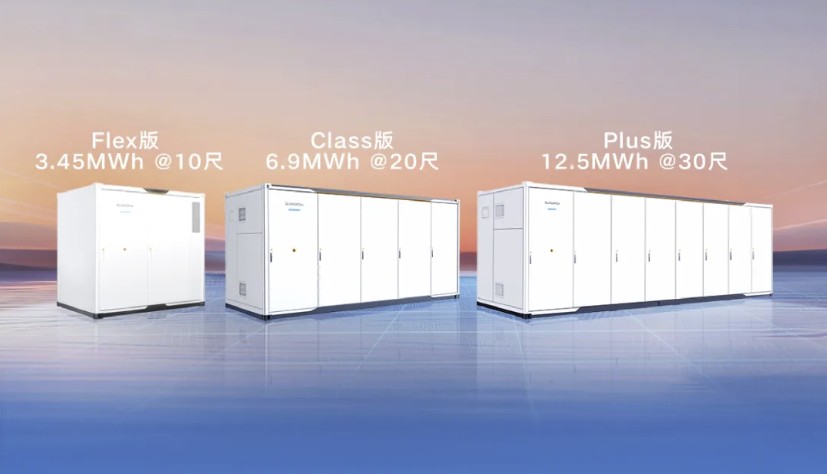
BYD Energy Storage, established in 2008, supplies energy storage products for utility-scale, commercial and industrial, residential, data center and emerging applications. In marine energy storage, the company said it is using high-safety, high-rate LFP technology for electric vessels, industrial equipment and construction machinery.
The agreement comes as electrification expands from ferries and inland vessels into ports, offshore vessels and hybrid propulsion systems. Grand View Research estimates that the global marine battery market was worth $775.9 million in 2025 and will reach $2.82 billion by 2033, representing a compound annual growth rate (CAGR) of 17.9% from 2026 to 2033. The firm said Europe was the largest market in 2025, while Asia-Pacific is expected to be the fastest-growing region.
The latest agreement represents a growing cooperation trend between Chinese battery suppliers and established maritime or logistics companies. Back to 2023, Wärtsilä signed a large multi-year supply agreement with EVE Energy to strengthen its battery supply chain for energy storage projects. In October 2025, CATL and Maersk signed a global strategic partnership that includes cooperation on electrifying container shipping, ports, inland transportation and warehousing, with CATL regarded as a preferred battery technology partner for Maersk’s decarbonization roadmap.
Despite the strong growth outlook, marine energy storage still faces significant barriers. High upfront costs remain a key constraint, and smaller shipowners especially see initial capital expenditure as a major obstacle. Meanwhile, the stringent classification-society safety certification requirements also continue to raise the threshold for large-scale adoption. Future technology advances are therefore likely to focus on smarter vessel energy management systems using AI-based diagnostics, as well as safer modular designs that can better isolate and contain thermal runaway risks.
Written by
Comments




Popular Posts