Batteries are setting prices, but long-duration storage will define the market
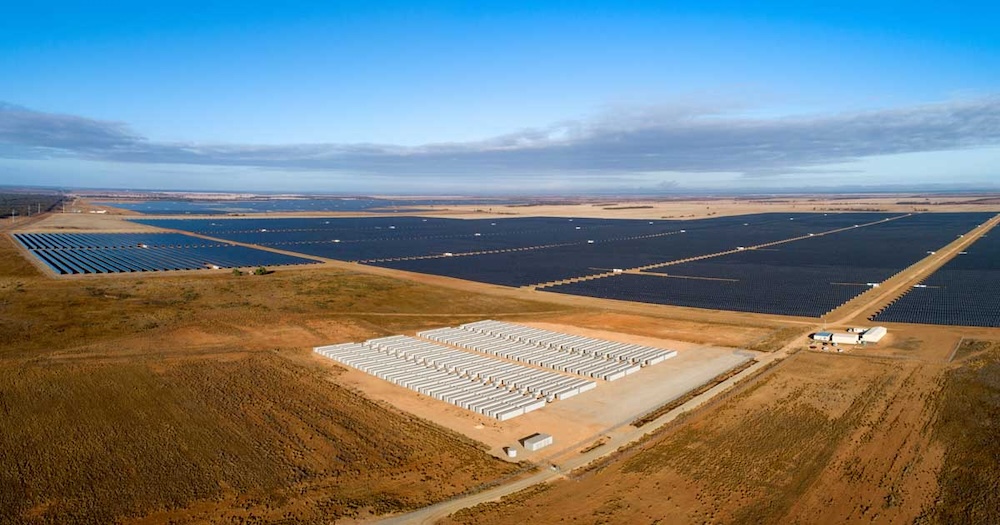
In the first quarter of 2026, batteries set prices nearly a third of the time, helping drive a 12 % reduction in average wholesale electricity costs.
Batteries set prices because they increasingly operate as the marginal generator in the National Electricity Market (NEM). When they discharge during peak demand periods, they replace higher-cost gas generation, effectively lowering the clearing price. Conversely, when charging during periods of excess solar, they absorb negative or low-cost energy, stabilising price volatility.
In simple terms: the technology that provides the marginal megawatt increasingly sets the price – and batteries are now that technology.
That is a remarkable shift in a system historically dominated by coal and gas.
But while this milestone is significant, it risks being misinterpreted. What we are seeing today is not the end state of the energy transition, it is the first phase.
And crucially, the current battery fleet – overwhelmingly dominated by short-duration lithium-ion systems – is only solving part of the problem.
Short-duration thinking
Today’s grid-scale batteries are highly effective at managing intra-day volatility. They absorb excess solar generation during daylight hours and discharge into evening peaks, smoothing price spikes and reducing reliance on gas peaking plants.
This capability has delivered tangible benefits: lower wholesale prices, improved grid responsiveness and reduced emissions intensity.
But the NEM is evolving rapidly and the nature of the challenge is changing.
Three key structural forces are now reshaping the system in Australia:
- The explosive growth of data centres
- Accelerating electrification across industry and transport
- Increasing renewable penetration, leading to periods of sustained oversupply
These forces are not simply increasing demand; they are changing its profile. The grid is becoming more variable, more complex and more exposed to multi-day imbalances between supply and demand.
Short-duration batteries – typically designed to discharge over one to four hours – are not built to address this. They can shift energy within a day, but they cannot stabilise the system across multiple days.
What we are witnessing now is batteries influencing prices at the margin. What will come next is far more consequential: storage defining the structural cost of electricity.
As renewable penetration increases, the economics of the grid will be increasingly determined by how effectively excess energy can be stored and redeployed over extended periods.
Reserve capacity market
This is where long-duration energy storage (LDES) becomes critical.
Unlike short-duration systems, long-duration storage is designed to discharge over eight, 10, 12 hours or more – and in some cases, across multiple days. This fundamentally changes its role in the system.
It is not just about arbitrage between midday and evening prices. It is about:
- Firming renewable generation over extended periods
- Providing reserve capacity during prolonged low-wind or low-solar events
- Reducing the need for expensive, underutilised peaking infrastructure
- Enabling higher overall penetration of renewables without compromising reliability
As storage duration increases, pricing power shifts from short-term arbitrage to system reliability. Long-duration storage does not just respond to price – it underwrites it by determining the cost of firming renewable supply over extended periods.
This means the cost of long-duration storage will increasingly set the floor price of electricity in a high-renewables grid. Emerging mechanisms such as capacity investment schemes and long-term energy service agreements (LTESAs) will further reinforce this dynamic, effectively locking in long-duration storage as a price-setting asset class.
As the NEM continues to decarbonise, one requirement will become increasingly unavoidable: reserve capacity.
Historically, this role has been played by gas. But as gas becomes less competitive – both economically and politically – the market will need alternative sources of dispatchable, reliable capacity. Long-duration storage is uniquely positioned to fill this gap as it offers:
- Dispatchability without fuel price volatility
- Scalability without emissions
- Flexibility across both grid-connected and off-grid applications
Importantly, it also aligns with the emerging needs of large industrial users and remote operations.
In off-grid and fringe-of-grid environments – particularly in mining, heavy industry, and remote communities – the value of long-duration storage is already clear. Diesel displacement alone can deliver immediate and measurable economic benefits.
These are not theoretical future use cases. They are current, investable opportunities.
Beyond lithium
Lithium-ion technology has played a critical role in getting the market to this point. Its speed of deployment and declining cost curve have made it the dominant solution for short-duration applications. But it is not a one-size-fits-all answer.
Long-duration storage requires different characteristics:
- Extended discharge capability
- Minimal degradation over long cycles
- Lower lifecycle costs over decades of operation
- Safety and scalability at large installations
This is where alternative chemistries — including vanadium flow batteries — come into their own. By decoupling power and energy capacity, these systems can be economically configured for long-duration use cases. They are inherently suited to applications where reliability, longevity, and depth of discharge matter more than short bursts of high power.
In other words, they are built for the next phase of the Australian energy market.
Despite all of this, the risk for policymakers and market participants is focusing too narrowly on current price outcomes. Yes, batteries are reducing prices today. But the deeper question is: what will determine prices tomorrow?
As the system becomes more dependent on renewables, the cost of firming – the ability to guarantee supply when the sun isn’t shining and the wind isn’t blowing – will become the dominant driver of electricity prices.
Whoever provides that firming capacity will effectively set the floor for the market.
Short-duration batteries cannot do this alone. Without long-duration storage, the system remains exposed to volatility, prolonged supply gaps, and continued reliance on gas as a backstop.
With it, the NEM can transition to a more stable, lower-cost and more resilient structure.
The current narrative rightly celebrates the rise of batteries. But it is incomplete. Lithium batteries are reshaping pricing dynamics, but they are not yet solving the system.
The next phase of the transition will be defined by technologies that can operate over longer time horizons, support reserve capacity, and underpin a fully renewable grid.
Long-duration storage is the missing piece. And as the NEM continues to evolve, it will not just participate in the market – it will define it. The question is no longer whether storage will shape Australia’s energy future. It is what kind of storage will set the rules.
Author: James Costello, chief executive officer of EORA Energy
More about
Written by

Comments




Popular Posts