Brazil battery storage growth outpaces official financing figures

Financing for renewable energy generation projects in Brazil reached BRL 36.3 billion ($6.6 billion) in 2025, according to a survey by CELA, a financial and strategic consulting firm. The total represents a 10.6% increase from 2024 but remains 22% below the record BRL 46.3 billion registered in 2022.
CELA said the renewable energy sector has yet to return to pre-2023 investment levels, as high interest rates, regulatory changes, and ongoing curtailment continue to constrain new project development.
The decline from the 2022 peak has not been uniform across technologies. Distributed solar has proven the most resilient segment, while utility-scale solar faces mounting pressure. Wind power is recovering from a historic low in 2024, and energy storage remains in an early stage of regulatory development.
Investment in distributed solar generation remained relatively stable between 2023 and 2025, ranging from BRL 13.0 billion to BRL 14.7 billion. Although well below the BRL 21.8 billion peak recorded in 2022, financing volumes consistently exceeded those of utility-scale solar during the period.
The 2022 surge was driven by a rush to secure grandfathering rights under Law 14.300, which established the legal framework for distributed micro- and mini-generation. Projects that applied for grid connection before January 2023 retained the previous tariff compensation rules through 2045. Financing volumes declined after the deadline passed, reflecting the end of that exceptional market dynamic.
CELA attributes the segment’s resilience to two main factors. The first is structural: unlike utility-scale projects, the economics of local distributed generation (DG) are only marginally affected by the new compensation rules because electricity generation and consumption occur simultaneously. This limits the impact of reduced credit compensation and preserves attractive payback periods for consumers.
The second factor is the remaining pipeline of remote DG projects with grandfathered rights. These include shared-generation and remote self-consumption projects whose grid connection requests were submitted before January 2023 and continued to secure financing in subsequent years.
CELA also noted that financing data for distributed solar may underestimate the growth of energy storage. Battery systems installed alongside solar arrays are often classified by lenders under photovoltaic financing programs, obscuring part of the expansion of battery energy storage systems (BESS) in official statistics.
Utility-scale solar
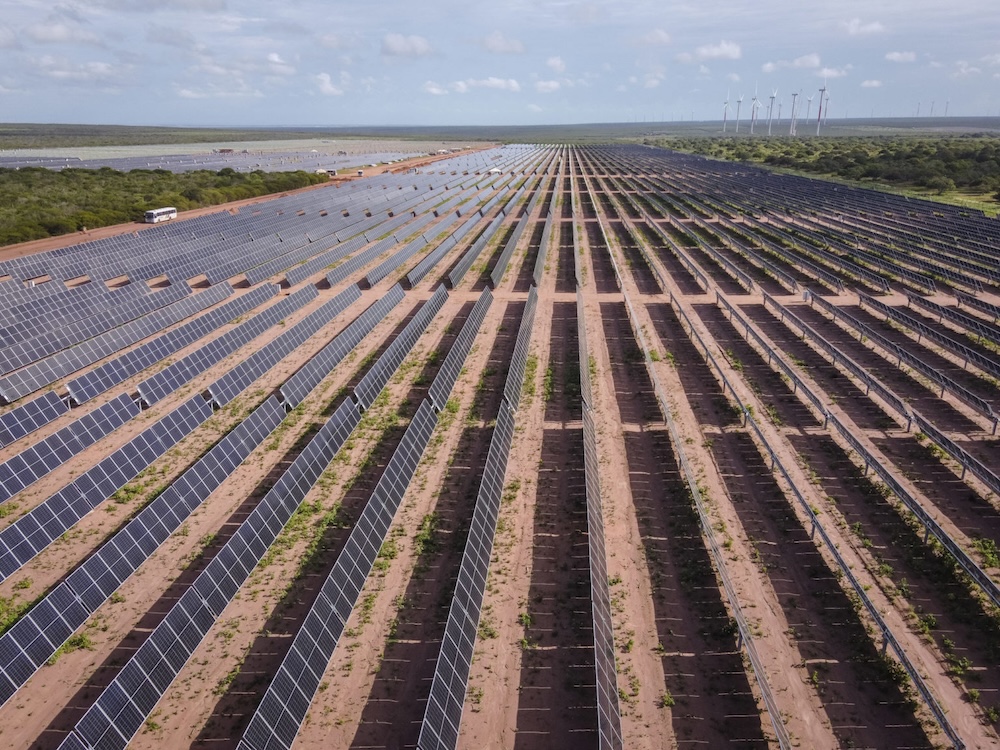
Financing for utility-scale solar projects fell from BRL 15.1 billion in 2022 to BRL 9.0 billion in 2025, reflecting pressure from two key factors.
The first is the cost of capital. With Brazil’s benchmark Selic rate ranging between 13.75% and 14.25% in recent years—its highest level since 2016—project financing has become significantly more expensive.
The second is modulation, an inherent characteristic of solar generation. Because output is concentrated during daylight hours, the growing penetration of solar power has increased energy supply during the same period, putting downward pressure on prices precisely when solar plants are generating. The result is a growing mismatch between production and market value. Industry participants view this as a technical and operational challenge that could be mitigated through complementary resources and system solutions, including wind power and energy storage.
The issue is further complicated by contracting requirements in Brazil’s free energy market. Large consumers typically seek flat energy delivery profiles throughout the day, requiring solar generators to rely on market instruments or complementary sources to cover periods of lower production. This reduces margins and makes project financing more challenging.
Curtailment remains an additional obstacle. Between April 2024 and March 2025, utility-scale solar plants experienced average curtailment rates of 17.1%. The absence of a compensation mechanism for mandatory curtailment has emerged as a major regulatory concern for new investments. Without greater revenue certainty, banks and investors tend to assign higher risk premiums to projects and adopt a more conservative approach to lending.
Wind projects secured BRL 12.5 billion in financing in 2025, up 40% from 2024, marking a recovery from a historic low when the sector was hit by high interest rates and curtailment.
Historically, wind power growth in Brazil was driven largely by regulated auctions and long-term financing from development banks. Today, however, the sector’s expansion is increasingly supported by the free energy market and self-generation arrangements, which have broadened the pipeline of commercially viable projects outside the regulated market.
As solar generation continues to depress electricity prices during daylight hours, generators and large energy consumers are increasingly incorporating wind power into their portfolios to achieve flatter delivery profiles. With a more diversified generation pattern and stronger output during periods of lower solar production, wind power has become a strategic complement to solar generation in the free market. This growing demand for balanced energy portfolios is helping to support a new cycle of project financing.
Battery market
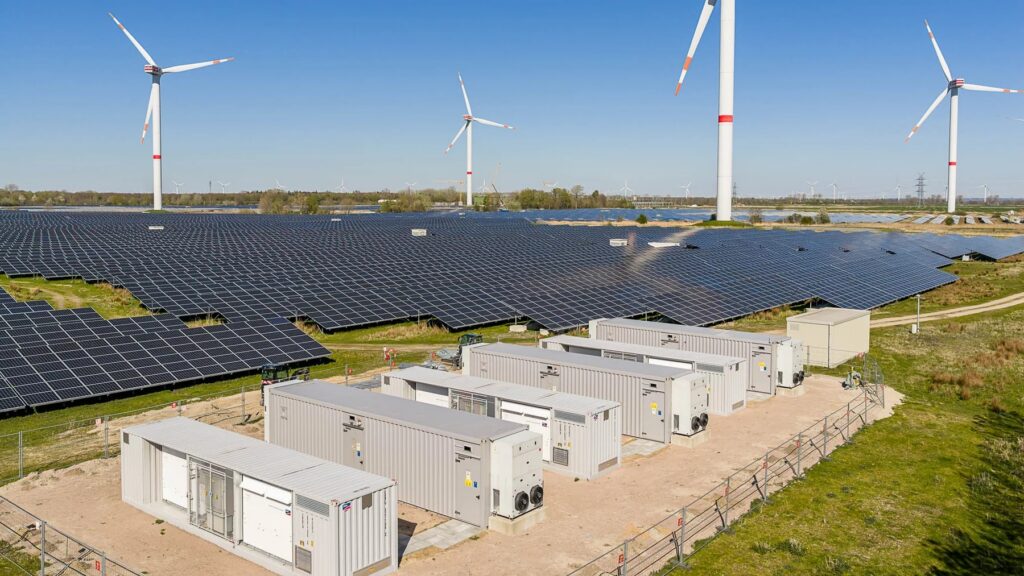
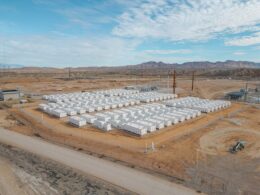
The BRL 126 million in battery energy storage system (BESS) financing recorded in 2025 represents growth from 2024 but does not fully reflect the technology’s expansion in Brazil. The figure remains well below the BRL 280 million peak reached in 2023, when large corporate bond issuances and private equity investment funds (FIPs) boosted investment in the segment.
According to CELA, fluctuations in annual financing volumes largely reflect the irregular use of funding instruments—including bank loans, capital markets transactions, and multilateral financing—rather than underlying demand for storage. Because these funding sources are not captured uniformly by the study’s methodology, financing data may not accurately represent the pace of market adoption.
The decline in storage costs has also affected financing volumes. Battery system prices have fallen by around 90% since 2010, with some models reportedly seeing prices cut in half during 2024 alone. As a result, the amount of financing required per installed unit has decreased, even as deployment continues to expand.
In addition, many battery systems installed alongside distributed solar projects are still classified by lenders under photovoltaic financing programs. This practice obscures part of the growth in the storage market and contributes to the underrepresentation of BESS investments in sector statistics.
CELA expects the first storage-only auctions, scheduled for 2026, to mark the beginning of a new growth phase for the segment and drive higher financing volumes in the coming years.
“Brazil’s renewable energy sector is undergoing a complex transition. Financing levels have yet to return to 2022 figures, and the challenges are real: high interest rates, curtailment without compensation mechanisms, and a market still seeking the right instruments to value and contract the complementarity between energy sources,” said Camila Ramos, executive director of CELA.
“The good news is that wind power and storage are assuming a strategic role precisely because they offer the solutions the electrical system needs. This should be reflected in financing volumes over the coming years,” she added.
The study covers disbursements made by the main institutions financing renewable energy generation projects in Brazil, including public and private banks, credit cooperatives, fintechs, and structured capital markets transactions.
More about
Written by
Popular Posts