Policy
Advertisement
Advertisement
Advertisement
Latest News
Irish regulator plans to reduce grid fees for energy storage
If the proposals by the Commission for Regulation of Utilities are implemented, all energy storage units would be charged solely under generator Transmission Use of System (TUoS) tariffs for the 2026/2027 tariff year, which begins on 1 October 2026.
Apr 30, 2026
Advertisement
Brazil can reach 7 GW in storage by 2035
Projections from the Energy Research Company (EPE), shared during the Absolar Storage Leaders event, depend on a stable legal framework and regulatory progress. Authorities and stakeholders in the electricity sector highlight the role of batteries in reducing costs, ensuring energy security, and expanding renewable energy.

Europe: AccelerateEU supports a 200 GW storage target, but omits financing mechanism
The European Commission’s AccelerateEU energy crisis plan endorses a 200 GW battery storage target for 2030 but proposes no dedicated financing mechanism to reach it, according to SolarPower Europe (SPE), which is calling for a separate EU-wide auction funded by emissions trading revenues.
Germany may curtail preferential treatment of large battery storage facilities near substations
The recently introduced preferential treatment for large battery storage facilities within a 200-meter radius of substations may soon be scaled back under the next amendment to the building code. At a minimum, lawmakers are considering tightening the eligible zone by introducing a minimum setback of 100 meters, effectively limiting the preferential treatment to projects located within a narrower band of 100 to 200 meters around substations.
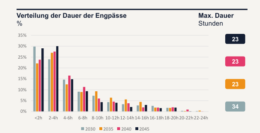
Long-duration battery storage can contribute to security of supply more cost-effectively than gas-fired power plants, LCP Delta finds
LCP Delta has conducted a study analyzing the potential contribution of long-duration battery storage to security of supply within capacity tenders in Germany, including an economic comparison with gas-fired power plants and the resulting costs to the public. However, the authors explicitly note that they are not advocating for a complete phase-out of new gas-fired power plants.





Advertisement
All Policy news

BBDF 2025: Why time is running out for standalone storage
Regulatory changes in Germany are closing the window for standalone storage. Development is shifting toward colocated battery storage which entails increasingly complex optimization, as discussions at the Battery Business Development Forum in Frankfurt am Main indicated.
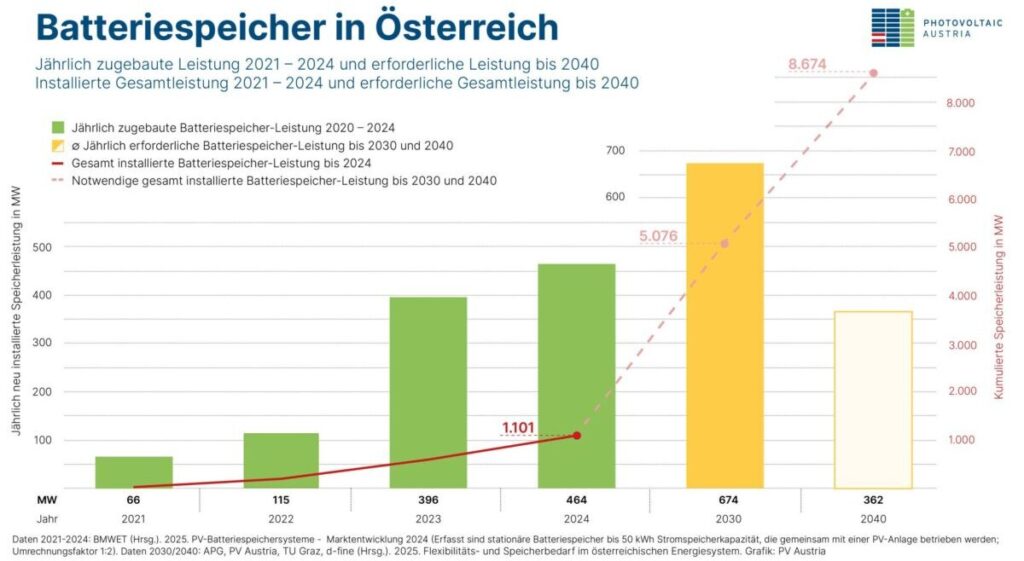
Austrian battery storage demand could rise eightfold to 8.7 GW by 2040
For the first time, an analysis shows how much storage capacity Austria needs on its path to 100% renewable electricity by 2030 and climate neutrality by 2040. Battery storage systems are seen as a key link for distributing solar power throughout the day and compensating for grid capacity gaps.

Advertisement
Advertisement

Tesla deploys 9.6 GWh of battery storage in Q2, 10 GWh Nevada cell factory ‘nears completion’
The electric vehicle company reported flat energy storage growth, quarter over quarter, but nearly 50% growth year-to-date, compared with 2024. Tesla has deployed 37.9 GWh over the past four quarters and is approaching 100 GWh deployed.
Advertisement