R&D
Advertisement
Advertisement
Advertisement
Latest News
Advertisement
Titanium emerges as a vanadium alternative for redox flow batteries
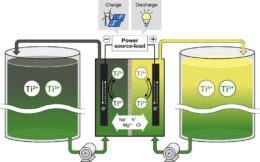
A Japanese-Chinese team developed a titanium molten salt redox-flow battery using abundant titanium ions and molten salt electrolytes to enable high-voltage, fast, and stable grid-scale energy storage. The system demonstrates high efficiency of over 97%, strong cycling stability, and improved cost and scalability compared to vanadium-based batteries, with further optimization underway.


Spain completes testing of Europe’s largest research vanadium BESS
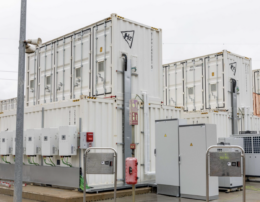
Spain’s Fundación Ciudad de la Energía (Ciuden), a government energy research foundation, has completed operational testing of a 1 MW/8 MWh vanadium redox flow battery (VRFB) system at its Cubillos del Sil technology center, which it says is the largest vanadium flow battery in Europe dedicated to applied research.

New cost-saving copper welding technique for battery cells revealed by Fraunhofer
Resistance projection welding technique could unlock cost-effective copper interconnection potential. Described as a major opportunity for German battery manufacturers, the new approach to copper interconnections will now be used in commercial production.





Advertisement
All R&D news
Advertisement

Evaluating the profitability of vanadium flow batteries
Researchers in Italy have estimated the profitability of future vanadium redox flow batteries based on real device and market parameters and found that market evolutions are heading to much more competitive systems, with capital costs down to €260/kWh at a storage duration of 10 hours.


Advertisement

Organic cathode for high-energy, fast-charging lithium-ion batteries
Massachusetts Institute of Technology (MIT) researchers have developed a new organic cathode material with an energy density higher than most cobalt-based cathodes. It can charge–discharge in as little as six minutes. Automaker Lamborghini has licensed the patent for the technology.

New solid state battery charges in minutes, lasts for thousands of cycles
Researchers from the Harvard John A. Paulson School of Engineering and Applied Sciences (SEAS) have developed a new lithium metal battery that can be charged and discharged at least 6,000 times — more than any other pouch battery cell — and can be recharged in a matter of minutes.