Trina Storage targets 50% share of Brazil’s battery auctions

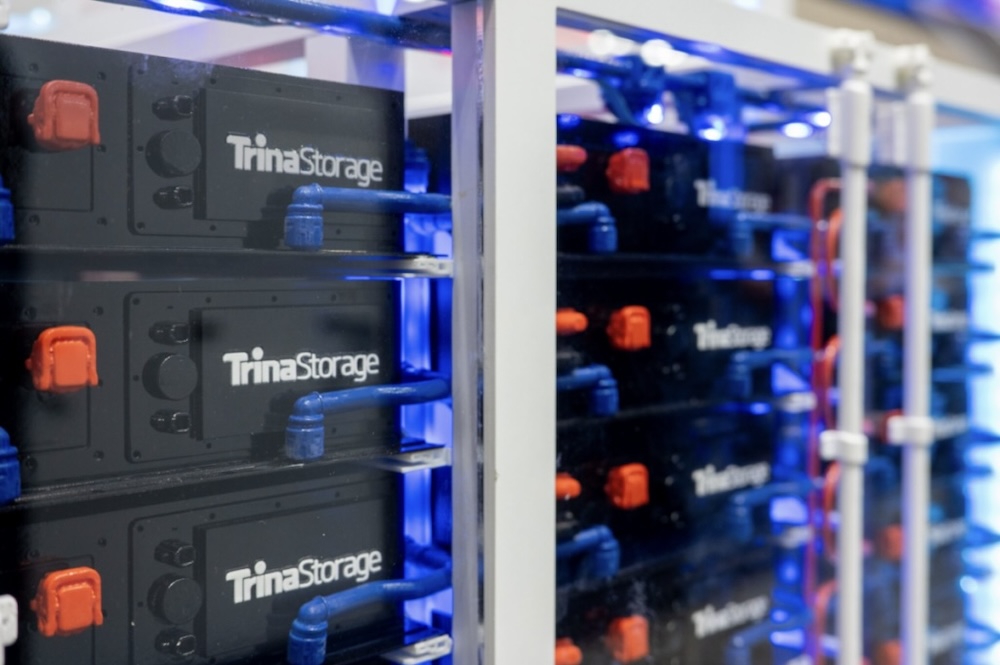
Trina Storage aims to secure up to 50% of the contracted volume in Brazil’s capacity reserve auctions for battery energy storage systems scheduled for December. The strategy includes offering its Elementa 3 platform, strengthening its local operations, and partnering with Brazilian suppliers to meet the national content requirements set out in the tender rules.
According to Mariana Goudel, Trina Storage’s sales manager for Latin America, the company remains focused on large-scale projects and sees the auctions as the main business driver for the utility-scale segment in the coming months. She told pv magazine Brazil that the company is targeting a 50% share of the auction volume.
Goudel said the company already works with more than 50 customers in the Brazilian market, including major power generators, developers, banks, investment funds and transmission companies, representing more than 100 GWh of storage projects. To meet demand associated with the auctions, Trina Storage maintains a local team covering technical, finance, logistics and human resources functions dedicated to the segment.
The company’s technology offering for the auction is the Elementa 3 platform, with 5 MWh and 6.25 MWh units. The platform is entering production in September, with the first batteries expected to leave the manufacturing line later in 2026.
Goudel said Trina Storage will continue to offer its Elementa 3 platform in next year’s auction, noting that the system has moved from a newly launched platform last year to one now entering production. She added that the company has sold more than 2.5 GWh for Argentina’s two battery storage auctions and plans to apply that experience in Brazil.
One of the differences Trina Storage has identified between the Brazilian and Argentine markets is how battery degradation is addressed over the contract period. In Argentina, according to Goudel, projects are remunerated based on the capacity available from the start and can initially be sized for five hours, reaching around 4.2 hours of duration at the end of a 15-year contract without requiring additional expansion.
In Brazil, the strategy is expected to be different. Because the model does not remunerate capacity above the contracted requirement, the company is considering initial oversizing and subsequent expansions, or augmentation, to maintain system capacity over the project’s lifetime.
The configuration will not be standardized, however. Trina Storage plans to adapt the replacement and expansion schedule to each project’s financial model, considering factors such as cash flow, capital expenditure and the desired maintenance frequency.
“It may make more sense to have a little more battery at the beginning and leave an increase for the eighth year, for example. Or a customer may want maintenance every two years. It is each customer’s strategy,” Goudel said.
National content
Trina has also established a strategy for meeting the auction’s national content requirements. The company is holding meetings with potential Brazilian partners to supply power conversion systems (PCS), energy management systems (EMS) and other components required for the solution.
Goudel said Trina Storage already has a plan in place to meet the requirements and is holding regular discussions with BNDES over potential local partners for PCS, EMS, BMS and other components needed for the auction.
The company plans to use the infrastructure of Trina Tracker, a group company already established in Brazil, to advance the accreditation and financing process. According to Goudel, Trina Tracker is registered with BNDES and has equipment eligible for Finame financing, which could help the storage solution meet the auction deadlines.
The strategy calls for using the first nationalization route established by BNDES, meeting three requirements, one of which must be strategic, as well as a minimum 15% nationalization rate. The company is considering PCS, electrical components and EMS among the items that could qualify as strategic.
Trina Storage has already developed local partnerships, Goudel said, but the names cannot yet be disclosed because the contracts are still being signed.
The company considers the registration schedule particularly important because it aims to be eligible to participate from the first auction, scheduled for Dec. 2. Goudel said early preparation is necessary given the possibility that the contracted volume could be determined during the first stage.
She said Trina Storage considers it critical to qualify for the Dec. 2 auction, as there may be no second auction on Dec. 4, making early participation with a competitive product essential.
From pv magazine Brazil
More about
Written by
Comments



Popular Posts