R&D
Advertisement
Advertisement
Advertisement
Latest News
Advertisement
Titanium emerges as a vanadium alternative for redox flow batteries
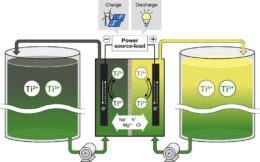
A Japanese-Chinese team developed a titanium molten salt redox-flow battery using abundant titanium ions and molten salt electrolytes to enable high-voltage, fast, and stable grid-scale energy storage. The system demonstrates high efficiency of over 97%, strong cycling stability, and improved cost and scalability compared to vanadium-based batteries, with further optimization underway.


Spain completes testing of Europe’s largest research vanadium BESS
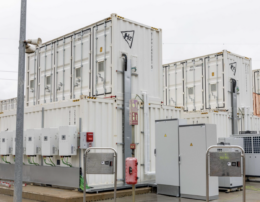
Spain’s Fundación Ciudad de la Energía (Ciuden), a government energy research foundation, has completed operational testing of a 1 MW/8 MWh vanadium redox flow battery (VRFB) system at its Cubillos del Sil technology center, which it says is the largest vanadium flow battery in Europe dedicated to applied research.
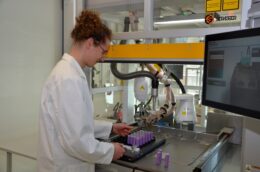
New cost-saving copper welding technique for battery cells revealed by Fraunhofer
Resistance projection welding technique could unlock cost-effective copper interconnection potential. Described as a major opportunity for German battery manufacturers, the new approach to copper interconnections will now be used in commercial production.





Advertisement
All R&D news


Advertisement

Advertisement

Air Energy launches to bring solid-state lithium-air batteries closer to commercialization
While some may call it a fairytale chemistry, solid-state lithium-air battery (SS-LAB) technology is now a step closer to commercial reality with the foundation of Air Energy. The startup has set out to scale the application of this promising technology over the next five years.
Nov 29, 2024

TU Munich, Max Planck Society establish German solar battery research center
The facility, in Garching, near Munich, will research technology that combines solar cells and batteries in a single component and can chemically store solar energy directly. Researchers expect high efficiency and fast charging and discharging processes to result. The solar batteries examined can also be used off grid.

Storing solar energy as heat in synthetic molecules for future energy storage systems
German researchers are testing lab-made molecules designed to absorb, store, and release solar energy on demand, acting as 'heat batteries'. The researchers say their method is more efficient at storing solar energy compared to conventional thermal heat storage systems.
Advertisement