R&D
Advertisement
Advertisement
Advertisement
Latest News
Advertisement
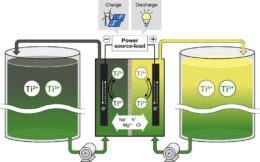
Titanium emerges as a vanadium alternative for redox flow batteries
A Japanese-Chinese team developed a titanium molten salt redox-flow battery using abundant titanium ions and molten salt electrolytes to enable high-voltage, fast, and stable grid-scale energy storage. The system demonstrates high efficiency of over 97%, strong cycling stability, and improved cost and scalability compared to vanadium-based batteries, with further optimization underway.


Spain completes testing of Europe’s largest research vanadium BESS
Spain’s Fundación Ciudad de la Energía (Ciuden), a government energy research foundation, has completed operational testing of a 1 MW/8 MWh vanadium redox flow battery (VRFB) system at its Cubillos del Sil technology center, which it says is the largest vanadium flow battery in Europe dedicated to applied research.
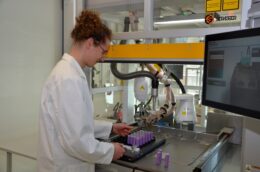
New cost-saving copper welding technique for battery cells revealed by Fraunhofer
Resistance projection welding technique could unlock cost-effective copper interconnection potential. Described as a major opportunity for German battery manufacturers, the new approach to copper interconnections will now be used in commercial production.





Advertisement
All R&D news
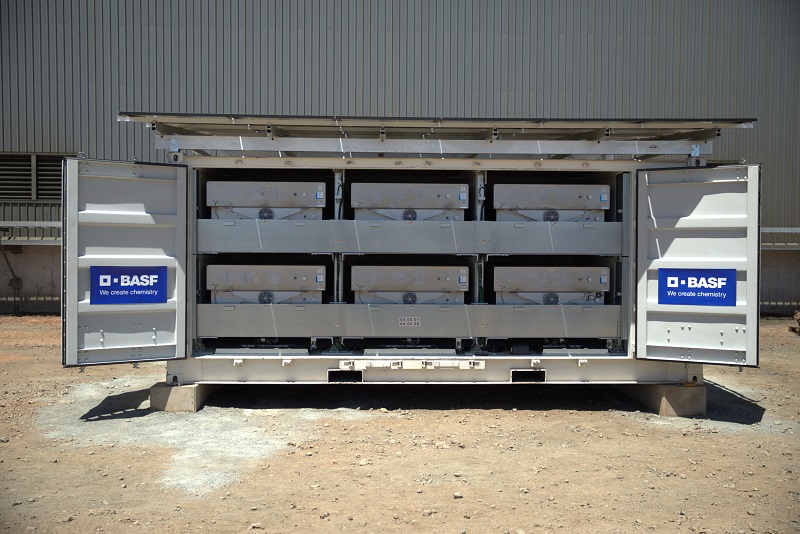
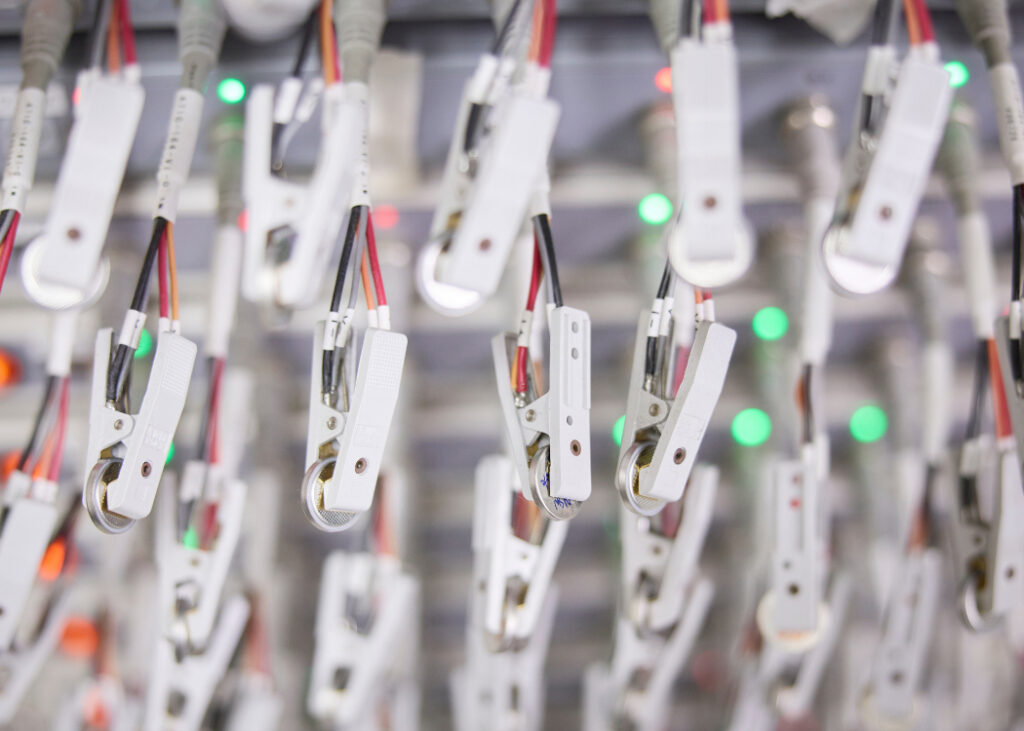
Researchers in Australia cook up recipe for better, more sustainable batteries
Academics at the University of New South Wales (UNSW) have developed a battery component using food-based acids found in sherbet and winemaking that could make lithium-ion batteries more efficient, affordable, and sustainable.
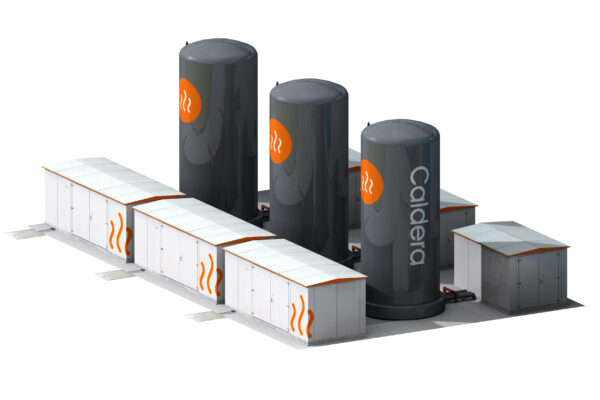
Storing solar power through aluminum-rock composite
UK-based Caldera has developed a new heat storage technology that can reportedly convert on-site generated solar power into on-demand heat, thus replacing conventional gas boilers. The system uses a composite of recycled aluminum and volcanic rocks to store heat at up to 500 C and produce steam.
Advertisement

LG Chem develops material capable of suppressing thermal runaway in batteries
LG Chem has announced that its Platform Technology R&D team has developed a temperature-responsive Safety Reinforced Layer (SRL), a material which is described as capable of surpressing thermal runaway. The material was analyzed in collaboration with researchers from Pohang University of Science and Technology (POSTECH) in South Korea, while the safety verification was conducted in partnership with LG Energy Solution.
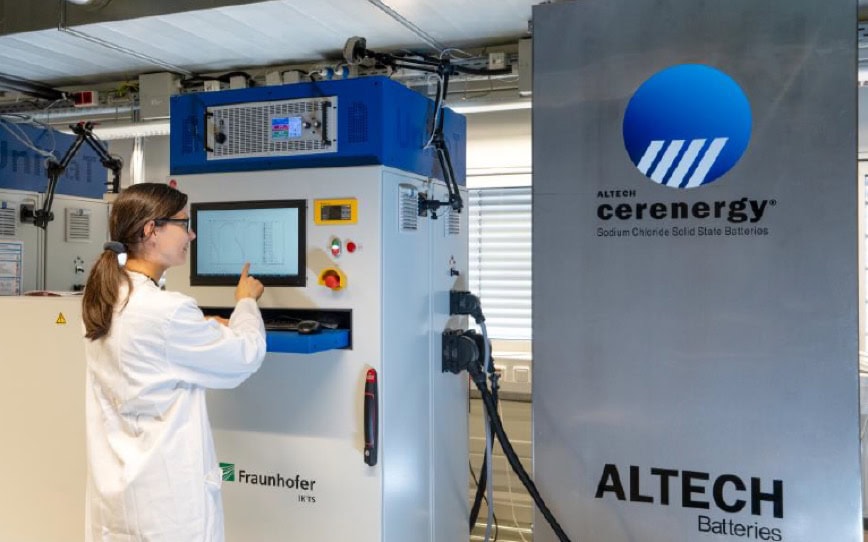
Altech’s sodium chloride solid state battery exceeds expectations
Western Australian battery technology company Altech Batteries has announced its first Cerenergy ABS60 salt-based battery energy storage system prototype is online and operating successfully across a range of temperatures, confirming its thermal stability and commercial viability.
Converting low-cost industrial polymer into zinc-ion battery cathodes
Researchers from the Flinders University of South Australia, in collaboration with Griffith University academics, have used a cheap commercial polymer to develop organic cathodes for aqueous zinc-ion batteries and optimized the battery performance using low-cost additives, as a more sustainable energy storage technology alternative to lithium-ion batteries.
Advertisement
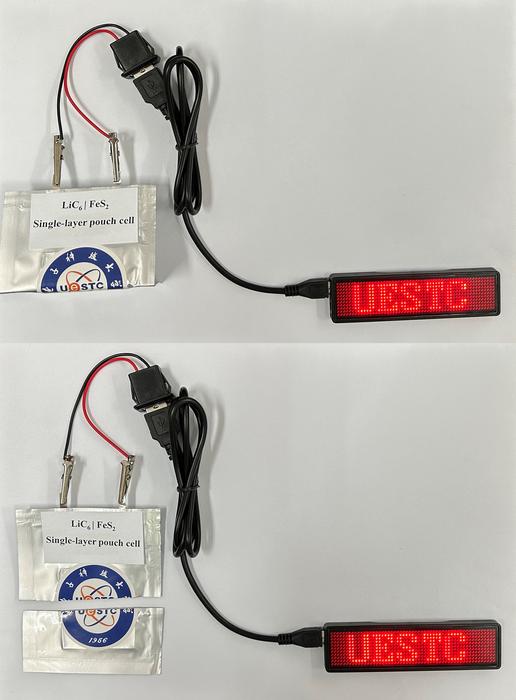
Researchers develop lithium-sulfur battery that can be cut, folded
By coating the iron sulfide cathodes in polymers, a research team was able to create transition-metal sulfide-based lithium batteries with stable cycling and high safety. After 300 cycles, a lithium carbide iron disulfide pouch cell retained 72.0% capacity with no capacity degradation after 100 cycles.

Most home battery storage systems meet warranty claims, new research finds
It took eight years of field measurements for researchers at the RWTH Aachen University in Germany to estimate the usable capacity of home battery energy storage systems and develop a dataset covering 106 system years and 14 billion datapoints. Their key finding was that home battery systems lose about two to three percentage points of usable capacity per year on average, meaning good news for the industry as most warranties in the market can be met with the implementation of capacity reserves.

Aluminium-polymer battery for stationary electricity storage
The device developed by TU Bergakademie Freiberg researchers uses aluminum as an anode, graphite as a cathode, and a polymer-based solid electrolyte. It is being validated and further developed for industrial production. The goal is storage capacity of 10 kWh.
Advertisement