R&D
Advertisement
Advertisement
Advertisement
Latest News
Advertisement
Titanium emerges as a vanadium alternative for redox flow batteries
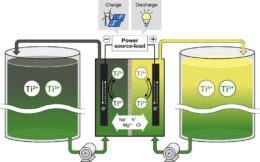
A Japanese-Chinese team developed a titanium molten salt redox-flow battery using abundant titanium ions and molten salt electrolytes to enable high-voltage, fast, and stable grid-scale energy storage. The system demonstrates high efficiency of over 97%, strong cycling stability, and improved cost and scalability compared to vanadium-based batteries, with further optimization underway.


Spain completes testing of Europe’s largest research vanadium BESS
Spain’s Fundación Ciudad de la Energía (Ciuden), a government energy research foundation, has completed operational testing of a 1 MW/8 MWh vanadium redox flow battery (VRFB) system at its Cubillos del Sil technology center, which it says is the largest vanadium flow battery in Europe dedicated to applied research.

New cost-saving copper welding technique for battery cells revealed by Fraunhofer
Resistance projection welding technique could unlock cost-effective copper interconnection potential. Described as a major opportunity for German battery manufacturers, the new approach to copper interconnections will now be used in commercial production.





Advertisement
All R&D news

U.S. DOE announces $125 million to fund two Energy Innovation Hubs
The U.S. Department of Energy (DOE) will provide $125 million in funding for two Energy Innovation Hub teams to accelerate energy storage technologies. The research focus will be energy storage for both transport and stationary storage applications.
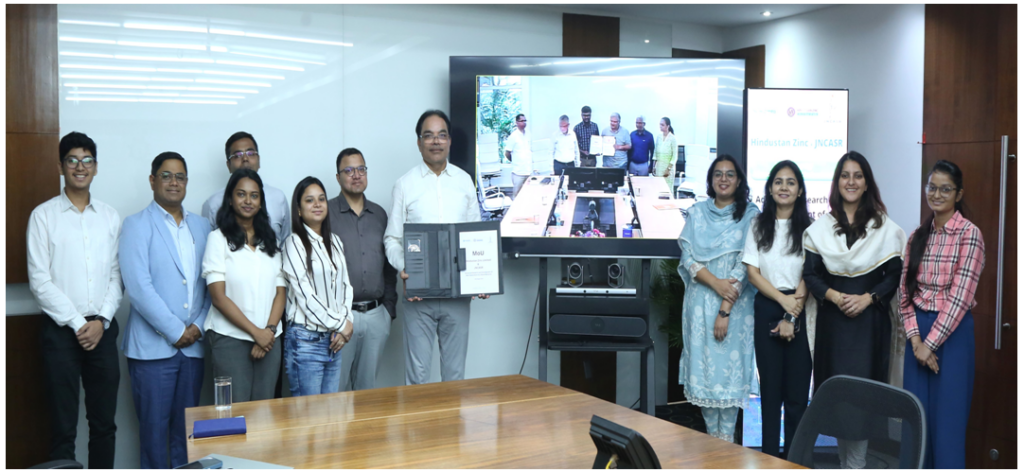
Indian initiative to commercialize new zinc-ion battery technologies
Indian mining company Hindustan Zinc will collaborate with Bangalore-based Jawaharlal Nehru Centre for Advanced Scientific Research (JNCASR) to develop new zinc alloys for use as anodes in zinc-ion batteries and electrolytes for use in rechargeable batteries.
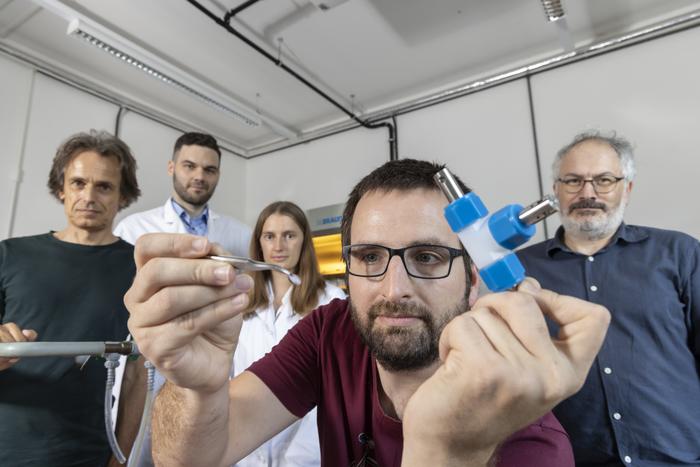
Understanding limits on practical capacity of lithium iron phosphate batteries
By using transmission electron microscopes to track lithium ions during charging and discharging cycles, researchers at Graz University of Technology (TU Graz) have gathered information that explains the discrepancy between theoretical and practical capacity of lithium ion phosphate batteries.
Advertisement

Fraunhofer IEE develops simulation tools for hybrid storage systems design
The researchers have created a degradation model that experts can use to determine battery aging in hybrid systems made up of lithium-ion batteries and supercapacitors. This makes it possible to determine whether it makes sense to combine the two technologies in individual cases. The tools should also help with the design of a hybrid system.


Advertisement

New approach for sizing large ESS as virtual synchronous generators, grid-forming inverters
New research has outlined a novel methodology to determine the minimum power rating of energy storage systems (ESSs) used for emergency under-frequency response. The aim is to maintain the frequency within a standard operating range.

Faster, cleaner way to extract lithium from battery waste
The microwave-based process developed by researchers at Rice University in Texas, US, can retrieve as much as 50% of lithium from spent cathodes in as little as 30 seconds, overcoming a significant bottleneck in lithium ion battery recycling.

Safe, long-cyclable lithium metal battery for high temperatures
A research team at the University of Hong Kong (HKU) has developed a new generation of lithium metal batteries, representing a significant advancement in the field. The innovation centers on microcrack-free polymer electrolytes, which promise extended lifespan and enhanced safety at temperatures as high as 100 degrees Celsius.
Advertisement