R&D
Advertisement
Advertisement
Advertisement
Latest News
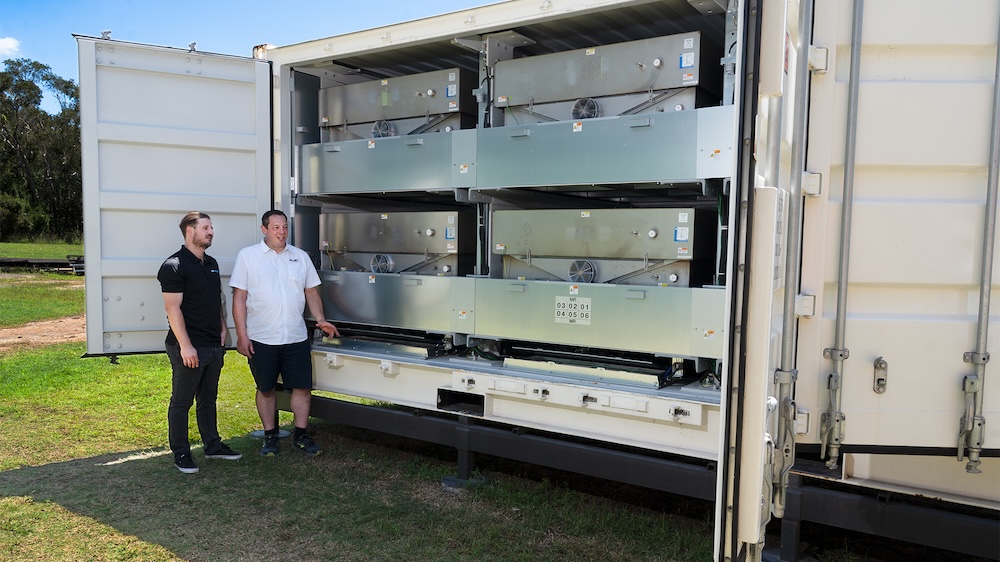
Lava Blue hosts Australia’s first grid-connected sodium-sulfur battery
Australia’s first grid-connected sodium-sulfur battery system has commenced operations in Queensland, helping power a critical minerals processing facility and providing a real-world demonstration of the long-duration energy storage technology.
Sep 23, 2026
Advertisement


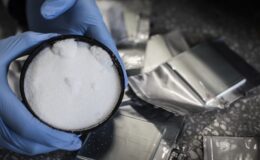
Iron-mediated cathode enables 206 Wh/kg sodium-ion pouch cell
Chinese researchers have developed an iron-mediated strategy that improves the reversibility and stability of lattice-oxygen redox reactions in sodium-ion battery cathodes. A 15.8 Ah pouch cell using the cathode achieved an energy density of 206 Wh/kg, with lattice-oxygen redox reversibility reaching 99%.

New electrode design by German institutes increases battery energy density by up to 15%
Fraunhofer ISE and its partners have developed thicker electrodes that could increase battery cell energy density by 10% to 15% without adding weight. The PFAS-free, solvent-free concept has been demonstrated in lithium-ion, sodium-ion, and zinc-ion cells and is designed for cost-effective mass production.
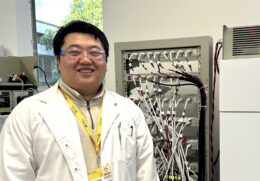

UNSW launches grid protection project for grid-forming BESS and inverters
Researchers at the University of New South Wales have launched a three-and-a-half-year project to examine how inverter-based resources interact with grid protection systems. The AUD 12.9 million initiative will use modeling, simulation and hardware-in-the-loop testing to assess fault-current behavior and protection requirements.

Advertisement
All R&D news


Boron nitride nanotubes move lithium ions 31 times faster than expected
Researchers at Rutgers University, the University of Illinois Chicago, and Argonne National Laboratory have found that boron nitride nanotube membranes transport lithium ions far faster than expected, pointing to potential applications in lithium recovery from spent batteries and blue energy generation.

Advertisement


Advertisement
Advertisement